Quotessence
Home / Quotes / Quote by Agatha Christie

Quote by Agatha Christie

Work

Crooked House

In this gripping novel, a young man returns to his ancestral home, only to find himself entangled in a web of deceit and intrigue. As he uncovers the family's dark past, he must navigate the treacherous waters of his own identity and the family's hidden agendas. more
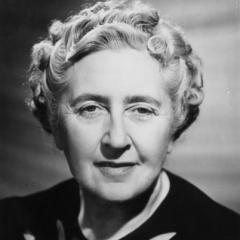
Author

Agatha Christie
Agatha Christie

Agatha Christie, a renowned British detective novel writer, is known as the Queen of Detective Fiction. She was born on September 15, 1890, and passed away on January 12, 1976. Christie's works are characterized by intricate plots, unique reasoning, and vivid characters, and have had a profound impact on detective fiction worldwide. more

You May Also Like

“I am not Seamus, who tacks emotions to the outside of his skin and whose words charge from his mouth on horseback. No one sees through me, except Xavier, and he does so not because I choose to give him access but because he knows himself. I will have to offer myself to Seamus, if I want something 'more' with him. Part of me can't believe I'd contemplate it, even for a moment. What do I have in common with an oversized, yarn-spinning, bread-mauling, divorced deliveryman attached to a seven-year-old? The rest of me doesn't know if I remember how to be close to another person. I practice mimicry, a Viceroy butterfly masquerading as a Monarch, a Superb Lyrebird echoing the calls of everything from chickadees to chain saws. I practice stories of my past, telling this sad memory or that scary one, and people feel I'm confiding in them because the words touch their deepest wounds, not because the tales hold any emotional resonance for me. My intimacies, the ones that have become my Sisyphus stones, long-term romantic relationships, the college one, ended with the nice young man shocked when I said I didn't love him and we had nothing in common. "We've spent two years talking about everything," he said. Yes, mimicry.”

“Christstollen. I can shake away thoughts of favorite gifts and trips to Oma's house and building snowmen with Santa hats every Christmas Eve, as long as enough snow covered the ground. But my mother's stollen won't fall off as easily. She made it for my father; he ate the first piece with cream cheese at breakfast while I had bacon and chocolate chip pancakes and my mother drank her special amaretto tea. The recipe is there, tucked in her recipe box, the index card translucent in places from butter stains. I hold it in my hand, considering, reading the ingredients and pawing through the cupboards and pantry. We have raisins and a bag of dried cranberries from last year's Christmas baking. There's a wrinkled orange in the fruit bin, a couple plastic packets of lemon juice that came with one of my father's fish and chips take-out orders. No marzipan, almonds, candied fruit, or mace. I'll be up all night. It's too much effort. But the card won't seem to leave my hand. So I start, soaking the fruit and preparing the sponge.”

“The reason that she loved cookbooks so much was that the people who wrote them were experts at food who weren't chefs. They could tell you how to make the coziest roast chicken with root vegetables, how to bake up a lasagna, they'd probably roll all the pasta sheets from scratch, using 00 flour imported from Italy; they'd add some rare and unexpected cheese, char the sides of each individual piece in a skillet to give it a restaurant sheen, add microgreens, and swirl some unneeded sauce around the plate before making the waiter give a speech on how to eat it properly. Why go through all of that trouble when a basic, familiar lasagna is the kind of comforting, rib-sticking goodness that most people want?”

“Intellectuals ponder, philosophize, interpret, and all this is essential to our shared experience, however, to feel the warmth of what lays at our feet within all that can be felt by the heart, is in an instant more powerful than mere words, we need to feel the words, capture the essence of what we see, and revel in the tastes of nature, and let ourselves allow our hearts to sing out loud, wild, and free.”

“Mechanism design takes up Hume's challenge by designing games in which the knaves to whom power is delegated are treated as players. The checks in the constitution are the rules of the game. These are used to prevent a player going off the rails in situations that the designer can effectively monitor and evaluate. However, it is the controls that are more important, since these apply to decisions that the designer can't monitor, or doesn't know how to evaluate. To get the players to act in accordance with the designer's aims rather than their own in such situations, it is necessary that the payoffs of the game be carefully chosen to provide the right incentives.”

“Multiculturalism denies historical and scientific evidence that people differ in important biological and cultural ways that makes their assimilation into host countries problematic. It is also extreme in the viciousness with which it attacks those who differ on this issue. These attacks are accompanied by a very generalized and one-sided denigration of Western traditions and Western accomplishments, and claims that a collective guilt should be assumed by all Europeans (whites) for the sins of their forebears. In the semireligious formulation of this view, expiation of these sins can only come through an absolute benevolence toward the poor of the world whose suffering is claimed to be the result of the white race and its depredations. In practical terms this can only be accomplished through aid to Third World peoples and generous immigration policies that allow large numbers of people to escape the poverty of the Third World.”