Quotessence
Home / Quotes / Quote by William Shakespeare

Quote by William Shakespeare

Work

The Merchant of Venice

The Merchant of Venice is a renowned tragedy that centers on the complex relationship between the merchant Antonio and the Jewish moneylender Shylock. The play delves into issues of mercy, justice, and the nature of friendship, while also addressing the prejudices of the time. more

Author
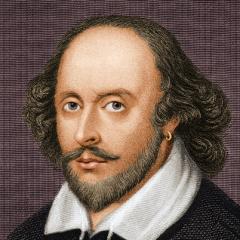
William Shakespeare
William Shakespeare

William Shakespeare (1564 - April 23, 1616) was one of the greatest poets of the English Renaissance, renowned for his dramatic works. His plays spanned a variety of genres, including tragedy, comedy, and history, and have had a profound impact on literature worldwide. more

You May Also Like

“Everyone knows that knowledge does now equal wisdom. You have certainly heard of ways to distinguish one from the other, but there is also something else to consider: Above that what is usually referred to as wisdom, there is more, and it is so rare, or so thoroughly ignored, that language does not even have a word for it! It is a holistic equilibrium of mental, emotional, and spiritual well-being. Something like that deserves a word, don’t you think? Moreover, it is neither a phantasm nor a pipe dream, but very real and attainable, when you live according to natural intelligence of being. It is time to reclaim certain words, which hold power within the letters they behold, but have been steered away from their original sense and purpose. One such word is Beauty. When wisdom meets insight, they give birth to beauty.”

“What is the Ego? Suppose a man puts himself at a window to see those who pass by. If I pass by, can I say that he placed himself there to see me? No; for he does not think of me in particular. But does he who loves someone on account of beauty really love that person? No; for the small-pox, which will kill beauty without killing the person, will cause him to love her no more. And if one loves me for my judgment, memory, he does not love me, for I can lose these qualities without losing myself. Where, then, is this Ego, if it be neither in the body nor in the soul? And how love the body or the soul, except for these qualities which do not constitute me, since they are perishable? For it is impossible and would be unjust to love the soul of a person in the abstract, and whatever qualities might be therein. We never, then, love a person, but only qualities. Let us, then, jeer no more at those who are honoured on account of rank and office; for we love a person only on account of borrowed qualities.”