“In the first place, what is liberalism, speaking generally, but an attack (whether mistaken or reasonable, is quite another question) upon the existing order of things? Is this so? Yes. Very well. Then my 'fact' consists in this, that Russian liberalism is not an attack upon the existing order of things, but an attack upon the very essence of things themselves--indeed, on the things themselves; not an attack on the Russian order of things, but on Russia itself. My Russian liberal goes so far as to reject Russia; that is, he hates and strikes his own mother. Every misfortune and mishap of the mother-country fills him with mirth, and even with ecstasy. He hates the national customs, Russian history, and everything. If he has a justification, it is that he does not know what he is doing, and believes that his hatred of Russia is the grandest and most profitable kind of liberalism. (You will often find a liberal who is applauded and esteemed by his fellows, but who is in reality the dreariest, blindest, dullest of conservatives, and is not aware of the fact.) This hatred for Russia has been mistaken by some of our 'Russian liberals' for sincere love of their country, and they boast that they see better than their neighbors what real love of one's country should consist in. But of late they have grown, more candid and are ashamed of the expression 'love of country,' and have annihilated the very spirit of the words as something injurious and petty and undignified. This is the truth, and I hold by it; but at the same time it is a phenomenon which has not been repeated at any other time or place; and therefore, though I hold to it as a fact, yet I recognize that it is an accidental phenomenon, and may likely enough pass away. There can be no such thing anywhere else as a liberal who really hates his country; and how is this fact to be explained among us? By my original statement that a Russian liberal is not a Russian liberal--that's the only explanation that I can see.”
Quote by Fyodor Dostoevsky
Book:The Idiot
Work
Author
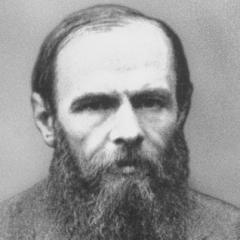
Fyodor Dostoevsky
A renowned Russian novelist and a pioneer of psychological novels. His works deeply reveal the complexity of human nature and the injustice of society, having a profound impact on literature worldwide. more
You May Also Like
“Eğitim, kültür ve bilgi aydınlığa açılan en geniş penceredir.”
“If we hadn't had Atatürk, we would have been an Afghanistan, an Iraq!”
Source: Atatürk in the Nazi Imagination
Source: Atatürk in the Nazi Imagination
Source: Atatürk in the Nazi Imagination
Source: Atatürk in the Nazi Imagination