Quotessence
Home / Quotes / Quote by George Orwell

Quote by George Orwell

“Fear of the mob is a superstitious fear. It is based on the idea that there is some mysterious, fundamental difference between rich and poor, as though they were two different races, like Negroes and white men. But in reality there is no such difference. The mass of the rich and the poor are differentiated by their incomes and nothing else, and the average millionaire is only the average dishwasher dressed in a new suit. Change places, and handy dandy, which is the justice, which is the thief? Everyone who has mixed on equal terms with the poor knows this quite well. But the trouble is that intelligent, cultivated people, the very people who might be expected to have liberal opinions, never do mix with the poor. For what do the majority of educated people know about poverty?”

Quote by George Orwell

Work

Down and Out in Paris and London

This book is a candid account of the author's time living in poverty, focusing on his struggles in Paris and London. It offers insights into the challenges faced by the underprivileged and provides a glimpse into the social and economic conditions of the time. more

Author
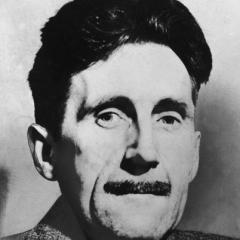
George Orwell
George Orwell

George Orwell, born Eric Arthur Blair, was a British novelist and political critic. Known for his sharp social criticism and profound insights into totalitarianism, Orwell is best remembered for his novels '1984' and 'Animal Farm', which remain influential to this day. more

You May Also Like

“There is often talk of human rights, but it is also necessary to talk of the rights of humanity. Why should some people walk barefoot, so that others can travel in luxurious cars? Why should some live for thirty-five years, so that others can live for seventy years? Why should some be miserably poor, so that others can be hugely rich? I speak on behalf of the children in the world who do not have a piece of bread. I speak on the behalf of the sick who have no medicine, of those whose rights to life and human dignity have been denied.”

“नीलमणि ने जब प्रवरा की आँखों में देखा, तो उसे लगा जैसे उनमें अथाह प्रेम का कोई सागर उमड़ रहा है। नीलमणि ने जब प्रवरा को उस मूक समर्पण के भाव में देखा, तो उसकी आत्मा में स्थित प्रेम अब मूर्त रूप लेने को विकल हो उठा। निराकार अब साकार होने को व्याकुल हो उठा। पुष्प की श्रद्धा उसे अपने आराध्य तक खींच लाई—वही श्रद्धा जिसे अभिव्यक्त करने में शब्द असमर्थ थे। अंततः दोनों ने माया-रूपी-शरीर को निराकार तत्व की अनुभूति का साधन मान लिया- वही माया जो दो निराकार तत्वों के विलय में बाधक भी थी और एक-मात्र माध्यम भी।”

“The biggest potential for helping us overcome shame is this: We are “those people.” The truth is…we are the others. Most of us are one paycheck, one divorce, one drug-addicted kid, one mental health illness, one sexual assault, one drinking binge, one night of unprotected sex, or one affair away from being “those people”–the ones we don’t trust, the ones we pity, the ones we don’t let our kids play with, the ones bad things happen to, the ones we don’t want living next door.”

“Laziness can be a value on its own for those who want to show supremacy through contempt for work and wish to be free individuals by fighting the enslavement to labor. While they don’t want to become dependent on ‘wage slavery’ and their livelihood only hinges on salaries, they feel confined to a social stratification, causing a collective stigma that results in poverty and underfeeding. (The daily job)”

“इस अनिश्चित जीवन में 'विश्वास' ही आशा का वह दीप है जो समाज को जोड़े रखता है। निस्वार्थ प्रेम और पवित्र विश्वास अपराध नहीं हैं, वरन जीवन का आधार हैं।”

“The poverty of our century is unlike that of any other. It is not, as poverty was before, the result of natural scarcity, but of a set of priorities imposed upon the rest of the world by the rich. Consequently, the modern poor are not pitied...but written off as trash. The twentieth-century consumer economy has produced the first culture for which a beggar is a reminder of nothing.”

“The reason that the rich were so rich, Vimes reasoned, was because they managed to spend less money. Take boots, for example. He earned thirty-eight dollars a month plus allowances. A really good pair of leather boots cost fifty dollars. But an affordable pair of boots, which were sort of OK for a season or two and then leaked like hell when the cardboard gave out, cost about ten dollars. Those were the kind of boots Vimes always bought, and wore until the soles were so thin that he could tell where he was in Ankh-Morpork on a foggy night by the feel of the cobbles. But the thing was that good boots lasted for years and years. A man who could afford fifty dollars had a pair of boots that’d still be keeping his feet dry in ten years’ time, while a poor man who could only afford cheap boots would have spent a hundred dollars on boots in the same time and would still have wet feet. This was the Captain Samuel Vimes “Boots” theory of socioeconomic unfairness.”