Quotessence
Home / Quotes / Quote by Jacques Monod

Quote by Jacques Monod

“Le développement du système métabolique qui a dû, à mesure que s'appauvrissait la soupe primitive, 'apprendre' à mobiliser le potentiel chimique et à synthétiser les constituants cellulaires pose des problèmes herculéens. Il en est de même pour l'émergence de la membrane à perméabilité sélective sans quoi il ne peut y avoir de cellule viable. Mais le problème majeur, c'est l'origine du code génétique et du mécanisme de sa traduction. En fait, ce n'est pas de 'problème' qu'il faudrait parler, mais plutôt d'une véritable énigme.”

Quote by Jacques Monod

Work

Chance and necessity: an essay on the natural philosophy of modern biology

This essay critically examines the concepts of chance and necessity in the context of modern biology. It investigates how these forces shape the evolution of life on Earth, offering a philosophical perspective on the natural processes that govern biological systems. more

Author
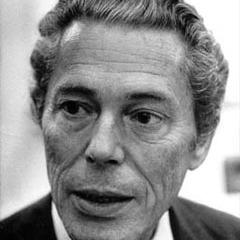
Jacques Monod
Jacques Monod

A renowned biologist and French Nobel laureate, Jacques Monod is known for his research in genetics and molecular biology. He made significant contributions to the discovery of gene regulation and the genetic code. more

You May Also Like

“Bean mentions that the tree does not flower until 30 to 40 years of age. American references have stated 10 to 14 years. All authors, including this one, tend to pass along time-honored information without determining, first hand, the actual response in question.”

“Service journalists. That's how an editor-in-chief described us to a roomful of corporate communicators. We are, he said, purveyors of ideas, of information and inspiration through writing intended to produce a positive response. Call what we do, then, action journalism. Transcending the mere delivery of information, it is writing with the expectation that our readers will act as a result of reading our words. And because of what we expect from them as a result of our efforts, a huge difference separates our kind of writing from the standard journalist's. They report and analyze. We report and advocate. They help sell newspapers and magazines. We help achieve organizational goals by influencing action. We create and enhance employee, shareholder, and customer confidence, build faith in corporate leadership, pride in its products. We heighten employee morale, foster belief in our company's intrinsic worth and trust in its mission. Ours is journalism with a definite slant, specific points of view, ulterior motives, particular objectives, all tilted toward the company, institution, association, or agency employing us.”

“Along with the concept of American Dream runs the notion that every man and woman is entitled to an opinion and to one vote, no matter how ridiculous that opinion might be or how uninformed the vote. It could be that the Borderer Presbyterian tradition of "stand up and say your rightful piece" contributed to the American notion that our gut-level but uninformed opinions are some sort of unvarnished foundational political truths. I have been told that this is because we redneck working-class Scots Irish suffer from what psychiatrists call "no insight".Consequently, we will never agree with anyone outside our zone of ignorance because our belligerent Borderer pride insists on the right to be dangerously wrong about everything while telling those who are more educated to "bite my ass!”

“Only optimists thought this possible at the time and even the leaders of the anti-slavery movement did not at first attempt the direct abolition of the institution of slavery itself, hoping instead that stopping the buying and selling of human beings would dry up the source and cause slavery as an institution to wither on the vine. At this juncture in history, Britain was the world's largest slave trader and the powerful vested interests which this created were able to roundly defeat early attempts to get Parliament to ban the trade. In the long run, however, such powerful opposition to the proposed ban, combined with equal tenacity on the other side, simply dragged out the political struggle for decades, making ever wider circles of people aware of the issue. Something that had never been a public issue before now became a subject of inescapable and heated controversy for years on end. Slavery could no longer be accepted as simply one of those facts of life that most people do not bother to think about. The long, drawn-out political controversy meant that more and more people had to think about it—and many who began to think about slavery turned against it. Eventually, such strong feelings were aroused among the British public that anti-slavery petitions with unprecedented numbers of signatures poured into Parliament from around the country, from people in all walks of life, until the mounting political pressures forced not only a banning of the international slave trade in 1808, but eventually swept the anti-slavery forces on beyond their original goals toward the direct abolition of the institution of slavery itself.”