Quotessence
Home / Quotes / Quote by Christopher Hitchens

Quote by Christopher Hitchens

“One ought not to quarrel with the aim of impartiality. It is just that, as an objective, it is harder to attain than its advocates imagine.”

Quote by Christopher Hitchens

Author
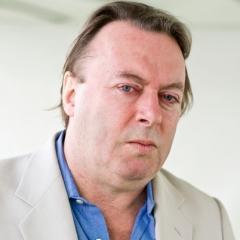
Christopher Hitchens

Christopher Hitchens was an English-American author, journalist, and social critic. He was known for his sharp wit and controversial views, particularly on religion and politics. Hitchens was a prominent figure in the public discourse of the late 20th and early 21st centuries. more

You May Also Like

“The sailors, goaded by the remorseless pangs of hunger, had eaten their leather belts, their shoes, the sweatbands from their caps, although both Clayton and Monsieur Thuran had done their best to convince them that these would only add to the suffering they were enduring. Weak and hopeless, the entire party lay beneath the pitiless tropic sun, with parched lips and swollen tongues, waiting for the death they were beginning to crave. The intense suffering of the first few days had become deadened for the three passengers who had eaten nothing, but the agony of the sailors was pitiful, as their weak and impoverished stomachs attempted to cope with the bits of leather with which they had filled them. Tompkins was the first to succumb. Just a week from the day the LADY ALICE went down the sailor died horribly in frightful convulsions. For hours his contorted and hideous features lay grinning back at those in the stern of the little boat, until Jane Porter could endure the sight no longer. "Can you not drop his body overboard, William?" she asked. Clayton rose and staggered toward the corpse. The two remaining sailors eyed him with a strange, baleful light in their sunken orbs. Futilely the Englishman tried to lift the corpse over the side of the boat, but his strength was not equal to the task. "Lend me a hand here, please," he said to Wilson, who lay nearest him. "Wot do you want to throw 'im over for?" questioned the sailor, in a querulous voice. "We've got to before we're too weak to do it," replied Clayton. "He'd be awful by tomorrow, after a day under that broiling sun." "Better leave well enough alone," grumbled Wilson. "We may need him before tomorrow." Slowly the meaning of the man's words percolated into Clayton's understanding. At last he realized the fellow's reason for objecting to the disposal of the dead man. "God!" whispered Clayton, in a horrified tone. "You don't mean—" "W'y not?" growled Wilson. "Ain't we gotta live? He's dead," he added, jerking his thumb in the direction of the corpse. "He won't care.”

“For Frege, an account of what it is for a purely logical power to be in act suffices to allow us to achieve a proper philosophical appreciation of what “content,” “object,” “thought,” “judgment,” and “truth,” as such, are. These notions come to be fully in place through an elucidation of that power, considered apart from our capacity to arrive at kinds of knowledge that are not purely logical in content. Our capacity for empirical judgment, when it comes into view, will come into view as a comparatively complex joint exercise of a variety of faculties, in which the logically fundamental notions that figure in its explication (“content,” “object,” thought,” “judgment,” “truth”) are still supposed to retain the specific sense originally conferred upon them in our explication of the purely logical case, while allowing for their extension to logically impure cases of thought and proposition. A certain picture of the role of reflection on the purely logical case, inthe order of explication of kinds of knowledge, is at work here—a picture that has been enormously influential on the subsequent development of analytic philosophy. On this picture, only if we are armed with a prior account of the case of purely logical thought, supplementing it as we go along, can we come to understand what empirically contentful theoretical thought (or practical thought) is. On this picture, the spatiotemporal bearing and the self-consciousness of the thinking subject do not belong to the form of thought (and hence their treatment does not belong, as Kant held, to a suitably capacious conception of philosophical logic); rather, all such further details among various species of thought are to be subsequently specified, if at all, through the introduction of further indices figuring within the content of thought. (Thoughts are simply conceived of as occurring at a time or at a person.) These consequences of the Fregean picture are not, on the whole, something for which post-Fregean analytic philosophers argue. Rather, it involves an entire philosophical picture that is simply tacitly, and largely unwittingly, assumed—a picture that is already under attack, albeit in very different ways, in both Kant and early Wittgenstein. According to this post-Fregean picture, we can furnish an account of the wider reaches of our capacity for finite theoretical cognition only by assuming the prior intelligibility of some self- standing account of how one of the ingredient capacities in empirical cognition—the capacity for logical thought—off its own bat is able to yield a delimitable sphere of truth-evaluable, object-related thoughts with judgable content, without its yet having entered into any form of co- operation with our other cognitive capacities.”

“Focusing on information flow will help us to understand better how cells and organisms work ... We need to describe the molecular interactions and biochemical transformations that take place in living organisms, and then translate these descriptions into the logical circuits that reveal how information is managed ... Two phases of work are required for such a programme: to describe and catalogue the logic circuits that manage information in cells, and to simplify analysis of cellular biochemistry so that it can be linked to the logical circuits ... A useful analogy is an electronic circuit. Representations of such circuits use symbols to define the nature and function of the electronic components used. They also describe the logic relationships between the components, making it clear how information flows through the circuit. A similar conceptualization is required of the logic modules that make up the circuits that manage information in cells.”