Quotessence
Home / Quotes / Quote by Romain Gary

Quote by Romain Gary

“J'ai connu et je connais encore, dans ma vie, des bonheurs inouïs. Depuis mon enfance, par exemple, j'ai toujours aimé les concombres salés, pas les cornichons, mais les concombres, les vrais, les seuls et uniques, ceux qu'on appelle concombres à la russe. J'en ai toujours trouvé partout. Souvent, je m'en achète une livre, je m'installe quelque part au soleil, au bord de la mer, ou n'importe où, sur un trottoir ou sur un banc, je mords dans mon concombre et me voilà complètement heureux. Je reste là, au soleil, le cœur apaisé, en regardant les choses et les hommes d'un œil amical et je sais que la vie vaut vraiment la peine d'être vécue, que le bonheur est accessible, qu'il suffit simplement de trouver sa vocation profonde, et de se donner à ce qu'on aime avec un abandon total de soi.”

Quote by Romain Gary

Work

Promise at Dawn

Promise at Dawn is a historical fiction set against the backdrop of World War I. The story follows the life of a young soldier, delving into his experiences of love, loss, and the search for redemption amidst the chaos of war. more

Author
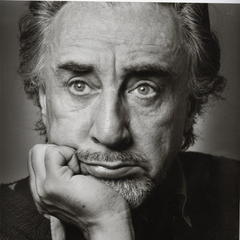
Romain Gary
Romain Gary

Romain Gary, born on May 21, 1914, in Lithuania, and died on December 2, 1980, in France, was a distinguished diplomat and a versatile writer. He is renowned for his successful diplomatic career and literary achievements. more

You May Also Like

“More than anything, I began to hate women writers. Frances Burney, Jane Austen, Elizabeth Browning, Mary Shelley, George Eliot, Virginia Woolf. Bronte, Bronte, and Bronte. I began to resent Emily, Anne, and Charlotte—my old friends—with a terrifying passion. They were not only talented; they were brave, a trait I admired more than anything but couldn't seem to possess. The world that raised these women hadn't allowed them to write, yet they had spun fiery novels in spite of all the odds. Meanwhile, I was failing with all the odds tipped in my favor. Here I was, living out Virginia Woolf's wildest feminist fantasy. I was in a room of my own. The world was no longer saying, "Write? What's the good of your writing?" but was instead saying "Write if you choose; it makes no difference to me.”

“When did you first feel like a grown woman and not a girl?” We wrote down our answers and shared them, first in pairs, then in larger groups. The group of women was racially and economically diverse, but the answers had a very similar theme. Almost everyone first realized they were becoming a grown woman when some dude did something nasty to them. “I was walking home from ballet and a guy in a car yelled, ‘Lick me!’” “I was babysitting my younger cousins when a guy drove by and yelled, ‘Nice ass.’” There were pretty much zero examples like “I first knew I was a woman when my mother and father took me out to dinner to celebrate my success on the debate team.” It was mostly men yelling shit from cars. Are they a patrol sent out to let girls know they’ve crossed into puberty? If so, it’s working.”

“If women really choose prostitution, why is it mostly marginalized and disadvantaged women who do? If we want to discuss the issue of choice, let’s look at who is doing the actual choosing in the context of prostitution. Surely the issue is not why women allegedly choose to be in prostitution, but why men choose to buy the bodies of millions of women and children worldwide and call it sex. Philosophically, the response to the choice debate is ‘not’ to deny that women are capable of choosing within contexts of powerlessness, but to question how much real value, worth, and power these so-called choices confer. Politically, the question becomes, should the state sanction the sex industry based on the claim that some women choose prostitution when most women’s choice is actually 'compliance’ to the only options available? When governments idealize women’s alleged choice to be in prostitution by legalizing, decriminalizing, or regulating the sex industry, they endorse a new range of 'conformity’ for women. Increasingly, what is defended as a choice is not a triumph over oppression but another name for it.”