Quotessence
Home / Quotes / Quote by George Saunders

Quote by George Saunders

“Your grandmother and I (and many others) would have had to be more extreme people than we were, during that critical period, to have done whatever it was we should have been doing. And our lives had not prepared us for extremity, to mobilize or to be as focussed and energized as I can see, in retrospect, we would have needed to be. We were not prepared to drop everything in defense of a system that was, to us, like oxygen: used constantly, never noted. We were spoiled, I think I am trying to say. As were those on the other side: willing to tear it all down because they had been so thoroughly nourished by the vacuous plenty in which we all lived, a bountiful condition that allowed people to thrive and opine and swagger around like kings and queens while remaining ignorant of their own history. What would you have had me do? What would you have done?”

Quote by George Saunders

Work

Liberation Day

Browse quotes and source details for this work. more

Author
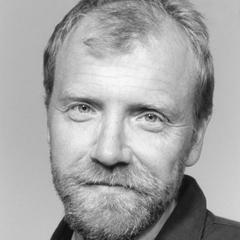
George Saunders
George Saunders

George Saunders, born on December 2, 1958, is an American writer known for his unique humor and profound insights. His works, primarily short stories, have gained widespread recognition and have been honored with numerous literary awards, including the Pulitzer Prize. more

You May Also Like

“Protesting problems doesn’t really bring solutions. It just brings more problems. We reap what we sow. If we want to reap happiness, we must sow happiness. And that happiness inspires, strengthens others and builds bridges. If we want solutions, we have to think about solutions and be detached from the problem. Otherwise, [if we focus on the problem] we take the problem with us, [keep it active,] and poison the future. If we want to reap love, we must love. With no ifs and buts. And, we need to do it OURSELVES instead of asking others to do it. This is freedom. This is empowerment. This is our own solution from the problem, from our sorrow, frrom our pain. And the more people detach themselves from the unwanted, and walk the path of love, and [focus on] the joy of the wanted, the more solutions we achieve for the world.”

“Negroes have proceeded from a premise that equality means what it says, and they have taken white Americans at their word when they talked of it as an objective. But most whites in America in 1967, including many persons of goodwill, proceed from a premise that equality is a loose expression for improvement. White America is not even psychologically organized to close the gap—essentially it seeks only to make it less painful and less obvious but in most respects to retain it. Most of the abrasions between Negroes and white liberals arise from this fact. White America is uneasy with injustice and for ten years it believed it was righting wrongs. The struggles were often bravely fought by fine people. The conscience of man flamed high in hours of peril. The days can never be forgotten when the brutalities at Selma caused thousands all over the land to rush to our side, heedless of danger and of differences in race, class and religion. After the march to Montgomery, there was a delay at the airport and several thousand demonstrators waited more than five hours, crowding together on the seats, the floors and the stairways of the terminal building. As I stood with them and saw white and Negro, nuns and priests, ministers and rabbis, labor organizers, lawyers, doctors, housemaids and shopworkers brimming with vitality and enjoying a rare comradeship, I knew I was seeing a microcosm of the mankind of the future in this moment of luminous and genuine brotherhood. But these were the best of America, not all of America. Elsewhere the commitment was shallower. Conscience burned only dimly, and when atrocious behavior was curbed, the spirit settled easily into well-padded pockets of complacency. Justice at the deepest level had but few stalwart champions. A good many observers have remarked that if equality could come at once the Negro would not be ready for it. I submit that the white American is even more unprepared.”

“A final victory is an accumulation of many short-term encounters. To lightly dismiss a success because it does not usher in a complete order of justice is to fail to comprehend the process of achieving full victory. It underestimates the value of confrontation and dissolves the confidence born of a partial victory by which new efforts are powered.”

“He understood that each individual group’s liberation was inextricably linked to the other—that justice and liberation could only be had if we all stand together and fight for the rights and liberties of the next individual or community. - Talila A. Lewis "For Ki'tay D. Davidson, Who LovesUs”

“When it comes to wanting to make a difference in the world, I find that it can also be useful to break down those gigantic, all-or-nothing goals into their component parts. This way, you are less likely to get overwhelmed or exhausted, or crash into feelings of futility. None of this is defeat. What becomes defeating is when great becomes the enemy of good—when we get so caught up in the hugeness of everything that we stall out before we’ve even started, when the problems appear so big that we give up on taking the smaller steps, managing what is actually in our control.”

“When our country was erupting in protests and marches, asking for the end of injustice against African American men and women, I was somewhat chastised by many of my followers for not speaking out against systemic racism. That was the first time it really occurred to me that I had a voice on this new platform. I had a strong voice. A voice that people wanted to hear...There is an old Southern expression: "I don't got a dog in that fight." But I immediately realized that was never going to be the case when it comes to standing up to racial injustice. We all "got a dog in that fight.”