Quotessence
Home / Quotes / Quote by Robert O. Paxton

Quote by Robert O. Paxton

“Unlike conservatives and cautious liberals, fascists never wanted to keep the masses out of politics. They wanted to enlist, discipline, and energize them. In any event, by the end of World War I, there was no possible turning back to a narrow suffrage. Young men almost everywhere had been summoned to die for their countries, and one could hardly deny the full rights of citizenship to any of them. Women, too, whose economic and social roles the war had expanded enormously, received the vote in many northern European countries (though not yet in France, Italy, Spain, or Switzerland). While fascists sought to restore patriarchy in the family and the workplace, they preferred to mobilize sympathetic women rather than disfranchise them, at least until they could abolish voting altogether.”

Quote by Robert O. Paxton

Work

The Anatomy of Fascism

This book delves into the political ideology of fascism, examining its roots, key features, and the ways it has influenced societies and governments throughout history. more

Author
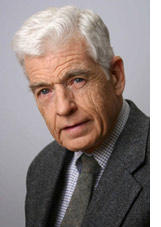
Robert O. Paxton
Robert O. Paxton

Robert O. Paxton is a renowned American historian known for his research on 20th-century European history, particularly the history of France. His works delve into the historical background of totalitarianism and racism, significantly influencing the understanding of modern political and social movements. more

You May Also Like

“ust discrimination,” in other words, “preference based on merit” is conspicuously absent in a process which, in our society, has a deep and wide influence as a sanctified example—political elections. Whether it is a genuinely democratic election in the West or a plebiscitarian comedy in the East, the one-man-one-vote principle is now taken for granted. The knowledge, the experience, the merits, the standing in the community, the sex, the wealth, the taxes, the military record of the voter do not count, only the vegetable principle of age—he must be 18, 21, 24 years old and still “on the hoof.” The 21-year-old semiliterate prostitute and the 65-year-old professor of political science who has lost an arm in the war, has a large family, carries a considerable tax burden, and has a real understanding of the political problems on which he is expected to cast his ballot—they are politically equal as citizens. Compared with a 20-year-old student of political science our friendly little prostitute actually rates higher as a voter.”

“Universal suffrage enfranchised everyone and, in doing so, reduced everyone's power to the smallest share possible. While this was acceptable when it was conceived as impotence over others, it becomes intolerable when we realize that our power over ourselves is included in the bargain. The individual in a regime of universal suffrage has an absolute minimum of influence.”

“Whether we are speaking of the philosophical history of the concept (universal suffrage) or the contemporary reality of its application, everyone stops somewhere. They all set a limit, even if that limit is the requirement of adulthood (a completely arbitrary classification if there ever was one). This unwillingness to apply the principle completely tells us something: First, it tells us that almost everyone knows that there ought to be some sort of qualification for electoral participation; and second, it tells us that no one knows exactly what this qualification ought to be. Because everyone agrees, even if unconsciously, on the first point—that qualifications there must be—then we can consider this an implicit acknowledgment that universal suffrage, even where it is preached, must be considered a purely sentimental notion which no one is actually willing to implement. We may then set about examining the second point, concerning the necessity and nature of the qualifications that ought to be set before the voting citizen.”