“A distinguished writer [Siméon Denis Poisson] has thus stated the fundamental definitions of the science: 'The probability of an event is the reason we have to believe that it has taken place, or that it will take place.' 'The measure of the probability of an event is the ratio of the number of cases favourable to that event, to the total number of cases favourable or contrary, and all equally possible' (equally like to happen). From these definitions it follows that the word probability, in its mathematical acceptation, has reference to the state of our knowledge of the circumstances under which an event may happen or fail. With the degree of information which we possess concerning the circumstances of an event, the reason we have to think that it will occur, or, to use a single term, our expectation of it, will vary. Probability is expectation founded upon partial knowledge. A perfect acquaintance with all the circumstances affecting the occurrence of an event would change expectation into certainty, and leave neither room nor demand for a theory of probabilities.”
Quote by George Boole
Work
An Investigation of the Laws of Thought
This book delves into the nature of thought and reasoning, examining the laws that govern logical processes and their application in various fields of knowledge. more
Author
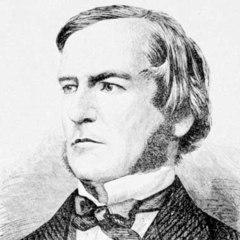
George Boole
George Boole was a renowned mathematician who made significant contributions to the fields of mathematical logic and Boolean algebra. Born on November 2, 1815, and passing away on December 8, 1864, his work had a profound impact on the development of computer science and electronic engineering. more
You May Also Like
Source: Crome Yellow
Source: Logic: An Introductory Course
Source: Fragments of Science: A Series of Detached Essays, Addresses, and Reviews. Volume 2
Source: An Intimate Collision: Encounters with Life and Jesus
“Objectivity begins with the realization that one is subjective.”
Source: The Third Heaven: The Rise of Fallen Stars
“Paradoxes are less paradoxical in their reference to truth than most of the most plausible axioms.”