Quotessence
Home / Quotes / Quote by Dylan Thomas

Quote by Dylan Thomas

“And death shall have no dominion. Dead men naked they shall be one With the man in the wind and the west moon; When their bones are picked clean and the clean bones gone, They shall have stars at elbow and foot; Though they go mad they shall be sane, Though they sink through the sea they shall rise again; Though lovers be lost love shall not; And death shall have no dominion. And death shall have no dominion. Under the windings of the sea They lying long shall not die windily; Twisting on racks when sinews give way, Strapped to a wheel, yet they shall not break; Faith in their hands shall snap in two, And the unicorn evils run them through; Split all ends up they shan't crack; And death shall have no dominion. And death shall have no dominion. No more may gulls cry at their ears Or waves break loud on the seashores; Where blew a flower may a flower no more Lift its head to the blows of the rain; Though they be mad and dead as nails, Heads of the characters hammer through daisies; Break in the sun till the sun breaks down And death shall have no dominion.”

Quote by Dylan Thomas

Work

Twenty-five poems

Browse quotes and source details for this work. more

Author
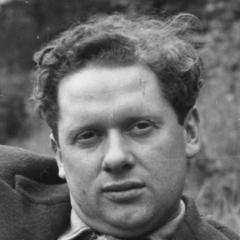
Dylan Thomas
Dylan Thomas

Dylan Thomas was a renowned Welsh poet known for his unique poetic style and passionate recitations. His works were filled with love for life and contemplation of death, making him one of the most influential poets of the 20th century. more

You May Also Like

“Everybody is condemned from his early childhood. Whatever he does on his own is not acceptable, because the crowd of people in which a child is born have their own ideas and ideals. The child has to fit with their ideas and ideals. The people who are in power are able to mold the child in the way they want. This is the psychology behind the fact that everybody wants to pretend to be what he is not.  They have never been allowed to be themselves. Each person has been made into somebody else. Everybody knows that they have been forced and molded into something that they are not. Nobody is themselves and nobody is at ease with themselves.”

“La signora Dambreuse stava vicino al fuoco, in mezzo a un semicerchio di una dozzina di persone. Con una parola cortese, gli fece cenno di sedere, ma senza parere meravigliata di non averlo veduto da un pezzo. Quand'egli entrò, stavano elogiando l'eloquenza dell'abate Coeur. Poi fu deplorata l'immoralità dei domestici, a proposito di un furto commesso da un cameriere; e i pettegolezzi si sgomitolarono. La vecchia signora di Sommer aveva un raffreddore, la signorina di Turvisot si maritava, i Montcharron non sarebbero tornati prima della fine di gennaio, e nemmeno i Bretancourt; era di moda trattenersi a lungo in campagna: e la miseria di quegli argomenti era come rinforzata dal lusso delle cose circostanti, ma ciò che si diceva era meno stupido del modo in cui si diceva, senza scopo, senza nesso, senza slancio. Eppure, c'erano uomini pratici della vita, un ex ministro, il curato di una grande parrocchia, due o tre alti funzionari del governo: ma si tenevano ai più triti luoghi comuni. Alcuni somigliavano a ricche vedove stanche, altri avevano modi da sensali, alcuni vegliardi accompagnavano mogli, delle quali avrebbero potuto farsi passare per nonni. La signora Dambreuse intratteneva tutti con grazia. Quando si parlava di un malato, aggrottava dolorosamente le sopracciglia; prendeva un'aria gioconda se si trattava di balli e di serate. Ella avrebbe dovuto presto privarsene, perché stava per far uscire di collegio una nipote di suo marito, un'orfana. Esaltarono il suo sacrificio: quello sì che era un condursi da madre di famiglia.”

“Here's the difference between knowledge and wisdom, if I told you to go grab a big bag of knowledge and bring it back to me you would find it will contain some truth and a lot of untruths. But if I told you to go grab me a big bag of wisdom and bring it back to me you would find that it's full of nothing but the truth. Knowledge does not require truth, but wisdom is always universally true. When you gain wisdom, you get a sense that you've truly only learned something that you already knew was true. This is why...Knowledge is of the past, Wisdom is of the future. We find Tribal Existence when we Seek wisdom, not knowledge. Our collective wisdom is an antidote to a society gone mad, Rules often fail us, and incentives often backfire, But our collective wisdom can and will help rebuild our mad world.”