Quotessence
Home / Quotes / Quote by Gustave Flaubert

Quote by Gustave Flaubert

“La signora Dambreuse stava vicino al fuoco, in mezzo a un semicerchio di una dozzina di persone. Con una parola cortese, gli fece cenno di sedere, ma senza parere meravigliata di non averlo veduto da un pezzo. Quand'egli entrò, stavano elogiando l'eloquenza dell'abate Coeur. Poi fu deplorata l'immoralità dei domestici, a proposito di un furto commesso da un cameriere; e i pettegolezzi si sgomitolarono. La vecchia signora di Sommer aveva un raffreddore, la signorina di Turvisot si maritava, i Montcharron non sarebbero tornati prima della fine di gennaio, e nemmeno i Bretancourt; era di moda trattenersi a lungo in campagna: e la miseria di quegli argomenti era come rinforzata dal lusso delle cose circostanti, ma ciò che si diceva era meno stupido del modo in cui si diceva, senza scopo, senza nesso, senza slancio. Eppure, c'erano uomini pratici della vita, un ex ministro, il curato di una grande parrocchia, due o tre alti funzionari del governo: ma si tenevano ai più triti luoghi comuni. Alcuni somigliavano a ricche vedove stanche, altri avevano modi da sensali, alcuni vegliardi accompagnavano mogli, delle quali avrebbero potuto farsi passare per nonni. La signora Dambreuse intratteneva tutti con grazia. Quando si parlava di un malato, aggrottava dolorosamente le sopracciglia; prendeva un'aria gioconda se si trattava di balli e di serate. Ella avrebbe dovuto presto privarsene, perché stava per far uscire di collegio una nipote di suo marito, un'orfana. Esaltarono il suo sacrificio: quello sì che era un condursi da madre di famiglia.”

Quote by Gustave Flaubert

Work

L'Éducation sentimentale

Browse quotes and source details for this work. more

Author
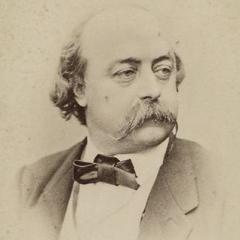
Gustave Flaubert
Gustave Flaubert

Gustave Flaubert, born on December 12, 1821 and died on May 8, 1880, was a prominent French writer of the 19th century. Known for his exquisite literary skills and profound psychological portrayals, Flaubert is best remembered for his masterpiece 'Madame Bovary'. more

You May Also Like

“Here's the difference between knowledge and wisdom, if I told you to go grab a big bag of knowledge and bring it back to me you would find it will contain some truth and a lot of untruths. But if I told you to go grab me a big bag of wisdom and bring it back to me you would find that it's full of nothing but the truth. Knowledge does not require truth, but wisdom is always universally true. When you gain wisdom, you get a sense that you've truly only learned something that you already knew was true. This is why...Knowledge is of the past, Wisdom is of the future. We find Tribal Existence when we Seek wisdom, not knowledge. Our collective wisdom is an antidote to a society gone mad, Rules often fail us, and incentives often backfire, But our collective wisdom can and will help rebuild our mad world.”

“Social Media Is giving everyone power and sometimes that power goes to the wrong people. A mental , unstable or Insane person, who has a lot of followers or fans on social media. Has more power, control and Is believable more than a normal, sane civilize person. That person is setting up standards and principles for normal civilized people In the society and everyone follows , because of majority rules. Nowadays we are not even surprised by people doing crazy things. It is how crazy can you be. That Is why today laws are changed. People are doing weird stuff and are uncultured, ungovernable, ill disciple, reckless, negligent, dangerous, ill mannered and not respectful. It is not doing something right, but It is doing something everyone Is doing.”

“Faith by its specific nature is an encounter with the living God—an encounter opening up new horizons extending beyond the sphere of reason. But it is also a purifying force for reason itself. From God's standpoint, faith liberates reason from its blind spots and therefore helps it to be ever more fully itself. Faith enables reason to do its work more effectively and to see its proper object more clearly. This is where Catholic social doctrine has its place: it has no intention of giving the Church power over the State. Even less is it an attempt to impose on those who do not share the faith ways of thinking and modes of conduct proper to faith. Its aim is simply to help purity reason and to contribute, here and now, to the acknowledgment and attainment of what is just.”

“Well, it’s something I never felt before I joined up,” he said, returning to his slow careful manner. “But coming back this time, I’ve felt it all right. [Farming] seems to cut you off too much. After a time, if you don’t look out, you don’t seem to care what’s happening to other people. You aren’t part of anything. You’re out for yourself – and just your family. Mind you, it’s easy to feel like that – because you have to work hard and it takes nearly all your time—and you don’t meet many people who are doing different jobs, the way you do in towns. But it’s not right somehow. It shouldn’t be like that. We’ve had enough of that.”