Quotessence
Home / Quotes / Quote by Galway Kinnell

Quote by Galway Kinnell

Work

A New Selected Poems

This book is a curated selection of poems, offering readers a diverse array of literary expressions and emotional insights. The poems within are believed to span various subjects and emotions, providing a rich tapestry of poetic expression. more
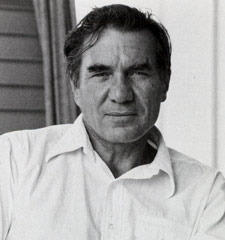
Author

Galway Kinnell
Galway Kinnell

Galway Kinnell was an American poet celebrated for his evocative and often mystical imagery. His poetry frequently delved into themes of nature, spirituality, and the human condition, earning him a place among the most influential poets in American literature. Kinnell's work is known for its emotional depth and lyrical beauty, which have garnered him numerous awards and a lasting legacy. more

You May Also Like

“Social Media Is giving everyone power and sometimes that power goes to the wrong people. A mental , unstable or Insane person, who has a lot of followers or fans on social media. Has more power, control and Is believable more than a normal, sane civilize person. That person is setting up standards and principles for normal civilized people In the society and everyone follows , because of majority rules. Nowadays we are not even surprised by people doing crazy things. It is how crazy can you be. That Is why today laws are changed. People are doing weird stuff and are uncultured, ungovernable, ill disciple, reckless, negligent, dangerous, ill mannered and not respectful. It is not doing something right, but It is doing something everyone Is doing.”

“Faith by its specific nature is an encounter with the living God—an encounter opening up new horizons extending beyond the sphere of reason. But it is also a purifying force for reason itself. From God's standpoint, faith liberates reason from its blind spots and therefore helps it to be ever more fully itself. Faith enables reason to do its work more effectively and to see its proper object more clearly. This is where Catholic social doctrine has its place: it has no intention of giving the Church power over the State. Even less is it an attempt to impose on those who do not share the faith ways of thinking and modes of conduct proper to faith. Its aim is simply to help purity reason and to contribute, here and now, to the acknowledgment and attainment of what is just.”

“Well, it’s something I never felt before I joined up,” he said, returning to his slow careful manner. “But coming back this time, I’ve felt it all right. [Farming] seems to cut you off too much. After a time, if you don’t look out, you don’t seem to care what’s happening to other people. You aren’t part of anything. You’re out for yourself – and just your family. Mind you, it’s easy to feel like that – because you have to work hard and it takes nearly all your time—and you don’t meet many people who are doing different jobs, the way you do in towns. But it’s not right somehow. It shouldn’t be like that. We’ve had enough of that.”

“If I ever wondered why so many people are so hostile to the tangible visible incarnations of the permeating invisible features of postmodern society, I need to look no further: according to populist narratives perpetuated by the media convergence, technology is the domain of experts who, having the wisdom of mini-deities invested with all the power of the corporate state, are not - cannot - be human.”

“But the difficulty in the Bolshevik philosophy, as in that of America, is that the principle of organisation for them is economic, whereas the groupings that are consonant with human instinct are biological. The family and the nation are biological, the trust and the trade union are economic. The harm that is done at present by biological groupings is undeniable, but I do not think the social problem can be solved by ignoring the instincts which produce those groupings. [...] The fundamental delusion of our time, in my opinion, is the excessive emphasis upon the economic aspects of life, and I do not expect the strife between Capitalism and Communism as philosophies to cease until it is recognised that both are inadequate through their failure to recognise biological needs.”