Quotessence
Home / Quotes / Quote by Eiji Yoshikawa

Quote by Eiji Yoshikawa

Author

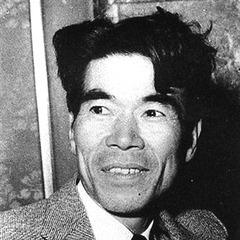
Eiji Yoshikawa
Eiji Yoshikawa

Eiji Yoshikawa was a distinguished Japanese novelist renowned for his historical novels. Born on August 11, 1892, in Tokyo, he was a prolific writer who delved into various facets of Japanese history and culture. Yoshikawa's works frequently portrayed the struggles and victories of ordinary individuals against the backdrop of significant historical events. His writing style was marked by its vivid descriptions and emotional depth, which struck a chord with a broad audience. He passed away on September 7, 1962. more

You May Also Like

“In the ashes on the hearth Saigyo traced and retraced the word, "pity." He had yet to learn to accept life with all its good and evils, to love life in all its manifestations by becoming one with nature. And for this he had abandoned home, wife, and child in that city of conflict. He had fled to save his own life, not for any grandiose dream of redeeming mankind; neither had he taken vows with the thoughts of chanting sutras to Buddha; nor did he aspire to brocaded ranks of the high prelates. Only by surrendering to nature could he best cherish his own life, learn how man should live, and therein find peace. And if any priest accused him of taking the vows out of self-love, not to purify the world and bring salvation to men, Saigyo was ready to admit that these charges were true and that he deserved to be reviled and spat upon as a false priest. Yet, if driven to answer for himself, he was prepared to declare that he who had not learned to love his own life could not love mankind, and that what he sought now was to love that life which was his. Gifts he had none to preach salvation or the precepts of Buddha; all that he asked was to be left to exist as humbly as the butterflies and the birds.”

“Ah, you pitiful, pitiful creatures! Beautiful family! Nobler far than stupid men..." he cried softly to himself. What was he doing here with his arrow? Cornering these creatures? Armor--an armor to brag about! Save his dignity before that armor-maker because of a promise? Foolish...foolish! If the old man jeered at him, why should it matter anymore; a common suit of armor would do as well! Armor did not make a man, nor did it signify valor. "Dumb creatures that you are, how magnificent! Sorrow, love--parental love incarnate! Were I that fox--what if Tokiko and Shigemori were trapped like this? Even the beast can rise above itself--could I as much?”

“Things don't always go to plan, no matter what your circumstances. But the flip side is all the unexpected, wonderful things that you could never have imagined happening. Ultimately it's all for the best that many things don't turn out the way we hoped. Try not to think of upset plans or schedules as personal failures or bad luck. If you can do that, you can change your own self and your life overall.”

“Chua's friends set out looking not because they hope to find her, but because the thought of abandoning anyone to the delta was too awful to contemplate, because all of them secretly feared that one day it might be their canoe that capsized in a storm, because they could imagine wandering that watery maze alone, and because they hoped that if that happened someone would come looking for them.”

“How was Gengo to know, Saigyo reflected, that this unheroic existence imposed even greater torment than the icy lashings of the Nachi Falls in its thousand-foot leap? How was Gengo to realize that Saigyo had not slept a single night undisturbed since he had fled his home for the Eastern Hills, that his sleep was haunted by the cries of his beloved daughter from whom he had torn himself. Who knew that during the day, when he went about his tasks of drawing water and chopping wood as he composed verses, the sighting of the wind in the treetops of the valleys below and the pines surrounding the temple sounded to him like the mourning of his young wife, and so troubled his nights that sleep no longer visited him? Never again would Saigyo find peace. He had wrenched asunder the living boughs of the tree that was his life. Remorse and compassion for his loved ones would dog him to the end of his days.”