Quotessence
Home / Quotes / Quote by Noam Chomsky

Quote by Noam Chomsky

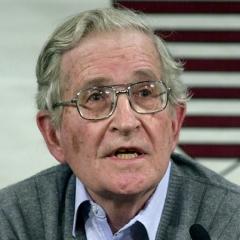
“In fact quite generally, commercial advertising is fundamentally an effort to undermine markets. We should recognize that. If you’ve taken an economics course, you know that markets are supposed to be based on informed consumers making rational choices. You take a look at the first ad you see on television and ask yourself … is that it’s purpose? No it’s not. It’s to create uninformed consumers making irrational choices. And these same institutions run political campaigns. It’s pretty much the same: you have to undermine democracy by trying to get uninformed people to make irrational choices.”

Quote by Noam Chomsky

Work

Author

Noam Chomsky
Noam Chomsky

Noam Chomsky, born on December 7, 1928, is a renowned linguist from the United States. His research in generative grammar and transformational grammar has had a profound impact on modern linguistics. Chomsky's academic achievements extend beyond linguistics, as he is also an active political commentator and philosopher, known for his unique perspective and profound insights. more

You May Also Like

“The uncomfortable, as well as the miraculous, fact about the human mind is how it varies from individual to individual. The process of treatment can therefore be long and complicated. Finding the right balance of drugs, whether lithium salts, anti-psychotics, SSRIs or other kinds of treatment can be a very hit or miss heuristic process requiring great patience and classy, caring doctoring. Some patients would rather reject the chemical path and look for ways of using diet, exercise and talk-therapy. For some the condition is so bad that ECT is indicated. One of my best friends regularly goes to a clinic for doses of electroconvulsive therapy, a treatment looked on by many as a kind of horrific torture that isn’t even understood by those who administer it. This friend of mine is just about one of the most intelligent people I have ever met and she says, “I know. It ought to be wrong. But it works. It makes me feel better. I sometimes forget my own name, but it makes me happier. It’s the only thing that works.” For her. Lord knows, I’m not a doctor, and I don’t understand the brain or the mind anything like enough to presume to judge or know better than any other semi-informed individual, but if it works for her…. well then, it works for her. Which is not to say that it will work for you, for me or for others.”

“If you're anything like me, you don't make up your mind about important issues by doing original research, pounding over primary sources and coming to your own conclusions; you listen to people who claim to know what they're talking about - "experts" - and try to determine which of them is more credible. You do your best to gauge who's authentically well-informed and unbiased, who has an agenda and what it is - who's a corporate flack, a partisan hack, or a wacko. I believe that global warming is real and anthropogenic not because I've personally studied Antarctic ice core samples or run my own computer climate models, but because all the people who support the theory are climatologists with no evident investment in the issue, and all the people who dismiss it as alarmist claptrap are shills of the petro-chemical industry or just seem to like debunking things, from the Holocaust to the moon landing. We put our trust - our votes, our money, sometimes our lives - in someone else's authority. In other words, most of us decide not what to believe but whom to believe. And I say believe because for most people, such decisions are matters of faith rather than reason.”

“The inner teachings of the East ask us to become good householders, in the Buddhist sense: tenders of space and the people who visit that space. Rather than always seeing we can "get, get, get" or extract what we want from life, we begin to ask a new question: How can I become the offering?”

“The beauty of evidence-based discipleship is that it allows us to measure progress and make informed decisions about how best to invest our time, energy, and resources.”

“Laws were made to establish a gradation of ranks; but it was soon found that the soil of America was opposed to a territorial aristocracy. To bring that refractory land into cultivation, the constant and interested exertions of the owner himself were necessary; and when the ground was prepared, its produce was found to be insufficient to enrich a proprietor and a farmer at the same time. The land was then naturally broken up into small portions, which the proprietor cultivated for himself. Land is the basis of an aristocracy, which clings to the soil that supports it; for it is not by privileges alone, nor by birth, but by landed property handed down from generation to generation, that an aristocracy is constituted. A nation may present immense fortunes and extreme wretchedness; but unless those fortunes are territorial, there is no true aristocracy, but simply the class of the rich and that of the poor.”