Quotessence
Home / Quotes / Quote by Robert Grudin

Quote by Robert Grudin

“What do I mean by “locked in time”? I mean, first of all, that we characteristically view mobile phenomena in immobile terms. We see processes like love and education as established circumstances rather than as complex temporal organisms whose lives depend on regular nourishment and renewal. Conversely, we tend to accept our own fear, weakness and ignorance as chronic disabilities rather than facing them, as we should, with the awareness that they are temporary and surmountable. Like still cameras, our minds consistently convert motion into stasis. In our language about time we resort to rocklike absolutisms – creation, completion, means, end, permanence, annihilation – terms whose static and extreme implications make them poor approximations of history and experience… We have little use at all for that most subtle and suggestive of words, renewal.”

Quote by Robert Grudin

Work

Time and the Art of Living

This work examines the relationship between time and human experience, considering both practical and philosophical dimensions of temporal awareness. The book encourages readers to reflect on their relationship with time beyond conventional productivity frameworks, suggesting that how one perceives moments contributes significantly to overall quality of life. Through various observations and considerations, the author presents ideas about the importance of present-moment awareness and the value of intentional living. The approach blends insights about efficient time use with deeper reflections on what constitutes a well-lived life, proposing that true mastery of time involves understanding its subjective nature rather than simply managing schedules and tasks. more

Author
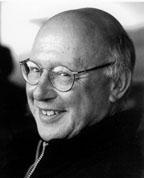
Robert Grudin
Robert Grudin

Robert Grudin is an American writer renowned for his contributions to literary criticism and theory. His work spans various domains including literary criticism, fiction, and poetry. more

You May Also Like

“I sometimes describe conflict as dandelions. At first one pops up—maybe someone says something that rubs you the wrong way, and it’s not such a big deal. It’s a surface issue. No need to spray pesticides. Mow over it, and it’ll go away. Or better yet, ignore it. But then it goes to seed. That’s okay! The seeds are pretty, then they blow away, and your dandelion is gone. Except it isn’t gone; it’s just hiding. Until next spring, when you wake up and your entire yard is full of dandelions. In the book Have a Nice Conflict: How to Find Success and Satisfaction in the Most Unlikely Places, the authors point out that one of the biggest challenges is to learn how to manage a conflict when you’re already firmly entrenched in it.4 So, it’s better to deal with it before you’re firmly entrenched. The best way to get rid of dandelions is to pull out the roots when you first notice them. It’s the same with conflict, which is best resolved when you address it immediately, before it grows roots and spreads.”

“Maturity is the ability to control your anger and settle your differences without violence or resentment. Maturity is patience; it’s the willingness to pass up short-term pleasure for long-term gain. It’s the ability to “sweat it out” in spite of heavy opposition or discouraging setbacks. It’s the capacity to face unpleasantness and frustration without complaining or collapsing. Maturity is humility. It’s being big enough to say, “I was wrong,” and when you are right, never needing to say, “I told you so.” Maturity is the ability to make a decision and follow through with it instead of exploring endless possibilities and doing nothing about any of them. Maturity means dependability, keeping your word, and coming through in a crisis. The immature are masters of alibi; they’re the confused and the disorganised. Their lives are a maze of broken promises, former friends, unfinished business, and good intentions. Maturity is the art of being at peace with what you can’t change, having the courage to change what you can, and the wisdom to know the difference.”