Quotessence
Home / Quotes / Quote by Elizabeth Goudge

Quote by Elizabeth Goudge

“Progress in evil was quick and easy; Apollyon was not a chap who hid himself and he gave every assistance in his power. The growth in goodness was so slow, at times so flat, so dull, and like the White Queen one had to run so fast to stay where one was, let alone progress; and there were few men who dared to say they had found God. It was easy to be a clever sinner, for the race to an earthly visible goal was short to run, so impossibly hard to be a wise saint, with the goal set at so vast a distance from this world and clouded with such uncertainty.”

Quote by Elizabeth Goudge

Work

The Rosemary Tree

In this suspenseful and evocative story, a young woman becomes entangled in a web of secrets and danger surrounding an ancient rosemary tree. The narrative delves into the complexities of human emotions and the supernatural, creating a haunting and unforgettable reading experience. more

Author

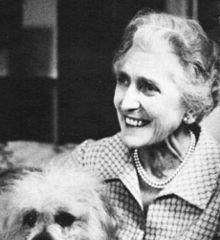
Elizabeth Goudge
Elizabeth Goudge

Elizabeth Goudge was a British author born on April 24, 1900, in Kent, England, and passed away on April 1, 1984. Known for her delicate emotions and rich imagination, her works mainly include historical novels and fantasy novels. Goudge's writing often explores themes of humanity, faith, and morality, which have won her a wide audience. more

You May Also Like

“Why could Tolkien not be more like Sir Thomas Malory, asked [Edwin] Muir, in the third Observer review of those cited above, and give us heroes and heroines like Lancelot and Guinevere, who ' knew temptation, were sometimes unfaithful to their vows,' were engagingly marked by adulterous passion? But T.H. White had already considered that paradigm, was indeed rewriting it at the same time as Tolkien in The Once and Future King; and he had seen the core of Malory's work not in romantic vice but in the human urge to murder. In White the poisonous adder that provokes the last disastrous battle is no adder but a harmless grass-snake, and the flash of the sword which brings on the two armies is not natural self-defense but natural blood-lust, creating a continuum from cruelty to animals to world wars and holocausts. Malory has to be rewritten to encompass a new view of evil.”

“If we further consider this divine panoramic view within which all evil is supposedly a "secret good" is held by a God who, according to Scripture, has a passionate hatred toward all evil, the "solution" becomes more problematic still. For it is certainly not clear how God could hate what he himself wills and sees as a contributing ingredient in the good of the whole. If all things play themselves out according to a divine plan, how can God genuinely hate anything?”