Quotessence
Home / Quotes / Quote by Charles Dickens

Quote by Charles Dickens

Work

The Pickwick Papers

Charles Dickens' 'The Pickwick Papers' is a seminal work of English literature, offering a humorous and insightful look into the social and political landscape of the time. The story revolves around the escapades of the members of the Pickwick Club, who embark on various adventures, encountering a diverse array of characters and situations that reflect the era's customs and values. more
Author

Charles Dickens
Charles Dickens

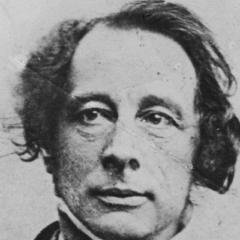
Charles Dickens, a British writer born on February 7, 1812, and died on June 9, 1870, is one of the greatest novelists of the 19th century. Known for his profound social criticism and vivid narrative style, Dickens' works extensively cover social reality, revealing various issues in the British society of the time. more

You May Also Like

“The most perfect solitude must entail the absence of all beings, but it must also tremble with the light of life. For example, a perfect solitude may find itself haunted by lives born of the imagination, characters lying on shelves in rows of books, or accompanied by figures waiting in dreams. The perfect solitude pushes one to sense the pulse of solitude itself; for example, a perfect solitude may be marked with the beat of one’s heart.”

“Anne, I don't want to live. . . . Now listen, life is lovely, but I Can't Live It. I can't even explain. I know how silly it sounds . . . but if you knew how it Felt. To be alive, yes, alive, but not be able to live it. Ay that's the rub. I am like a stone that lives . . . locked outside of all that's real. . . . Anne, do you know of such things, can you hear???? I wish, or think I wish, that I were dying of something for then I could be brave, but to be not dying, and yet . . . and yet to [be] behind a wall, watching everyone fit in where I can't, to talk behind a gray foggy wall, to live but to not reach or to reach wrong . . . to do it all wrong . . . believe me, (can you?) . . . what's wrong. I want to belong. I'm like a jew who ends up in the wrong country. I'm not a part. I'm not a member. I'm frozen.”

“Having arrived at this point, he had found no direction in which to go save that of further withdrawal into a subjectivity which refused existence to any reality or law but its own. During these postwar years he had lived in solitude and carefully planned ignorance of what was happening in the world. Nothing had importance save the exquisitely isolated cosmos of his own consciousness. Then little by little he had had the impression that the light of meaning, the meaning of everything was dying. Like a flame under a glass it had dwindled, flickered and gone out, and all existence, including his own hermetic structure from which he had observed existence, had become absurd and unreal.”

“The fear of rape puts many women in their place - indoors, intimidated, dependent yet again on material barriers and protectors... I was advised to stay indoors at night, to wear baggy clothes, to cover or cut my hair, to try to look like a man, to move someplace more expensive, to take taxis, to buy a car, to move in groups, to get a man to escort me—all modern versions of Greek walls and Assyrian veils, all asserting it was my responsibility to control my own and men's behavior rather than society's to ensure my freedom. I realized that many women had been so successfully socialized to know their place that they had chosen more conservative, gregarious lives without realizing why. The very desire to walk alone had been extinguished in them—but it had not in me.”

“We learn about life by exploring the texture and depth of space that composes our private inner world. In solitude we revisit our wounded feelings, sins, doubts, and deepest despair, replay poignant memories of loved ones, project what we are becoming, and ascertain the purpose of our being.”