Quotessence
Home / Quotes / Quote by Thomas Paine

Quote by Thomas Paine

“Now, if the writers of these four books [Gospels] had gone into a court of justice to prove an alibi, (for it is of the nature of an alibi that is here attempted to be proved, namely, the absence of a dead body by supernatural means,) and had they given their evidence in the same contradictory manner as it is here given, they would have been in danger of having their ears cropt for perjury, and would have justly deserved it. Yet this is the evidence, and these are the books, that have been imposed upon the world as being given by divine inspiration, and as the unchangeable word of God.”

Quote by Thomas Paine

Work

The age of reason

Pensado by Thomas Paine, this seminal text delves into the author's beliefs regarding the role of reason in understanding the world and its implications for religion and governance. It is a critical examination of the supernatural and the divine, advocating for a rational approach to understanding the universe. more

Author

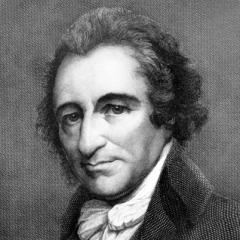
Thomas Paine
Thomas Paine

Thomas Paine, born on February 9, 1737, and died on June 8, 1809, was a prominent American writer, political figure, and philosopher during the American Revolutionary War. He is renowned for his radical democratic ideas and his contributions to the American independence movement. more

You May Also Like

“And, indeed, in the world little dictators rule with an iron hand: Herod, Philip, Statius Quartus, the Caesar. With boundless arrogance they walk over the people of God. With one stroke of the pen they cause thousands to disappear or die or both; masters of torture do their dirty work for them in dark and dismal cellars while above, in the beautiful halls, they strut to festive music and exchange civilized pleasantries. But the church knows that even as this happens “forever is King our Lord Jesus Christ.” This was true then as it is true now. Nothing is more disturbing for the oppressor than this. Nothing is more comforting for the faithful.”

“Her innocence was maddening. She should know. She should know what her steward had done. She should know it to be her fault whether she’d given the order or not–and whether she knew or not. Innocent? Her? Never. He did not want her to know. He did not want her to see. But: Look at me, he found himself thinking furiously at her. Look at me. She lifted her eyes, and did.”