“In everyday language it very frequently happens that the same word has different modes of signification — and so belongs to different symbols — or that two words that have different modes of signification are employed in propositions in what is superficially the same way. Thus the word 'is' figures as the copula, as a sign for identity, and as an expression for existence; 'exist' figures as an intransitive verb like 'go', and 'identical' as an adjective; we speak of something, but also of something's happening. (In the proposition, 'Green is green'— where the first word is the proper name of a person and the last an adjective — these words do not merely have different meanings: they are different symbols.)”
Quote by Ludwig Wittgenstein
Work
Tractatus Logico-Philosophicus
Ludwig Wittgenstein's seminal text delves into the foundations of logic and philosophy, offering a unique perspective on the nature of truth, language, and thought. more
Author
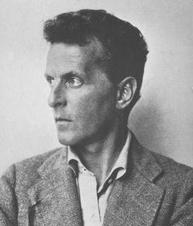
Ludwig Wittgenstein
Ludwig Wittgenstein was one of the most important philosophers of the 20th century, renowned for his profound contributions to language, logic, and philosophical methods. His ideas have had a significant impact on the development of analytic philosophy and philosophy of language. more
You May Also Like
“In the absence of love all logic is treason.”
Source: Either Right or Human: 300 Limericks of Inclusion
Source: God Who Cares?
Source: DUNE
“Intolerance is the enemy, not illogicality.”
Source: Visvavictor: Kanima Akiyor Kainat
Source: I Know Why the Caged Bird Sings
“{W}e can transfer the study of any formal system—in fact the study of”
Source: Godel, Escher, Bach: An Eternal Golden Braid
Source: Godel, Escher, Bach: An Eternal Golden Braid
“[M]eaning is an automatic by-product of our recognition of any isomorphism.”
Source: Godel, Escher, Bach: An Eternal Golden Braid
“Semua pernyataan adalah salah, termasuk yang sedang Anda baca ini.”
Source: Master of Stupidity
Source: Pursued: God’s relentless pursuit and a drug addict’s journey to finding purpose