Quotessence
Home / Quotes / Quote by Jean Froissart

Quote by Jean Froissart

“Without him nothing was done, and through him everything was done, and the king trusted him more than any other.”

Quote by Jean Froissart

Author
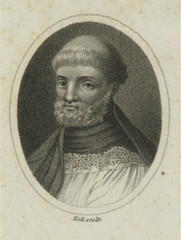
Jean Froissart
Jean Froissart

Jean Froissart, a medieval French historian and writer, was born in 1337 and died in 1405. His works are renowned for their detailed historical records and vivid depiction of the social landscape of his time. more

You May Also Like

“MY HEART HAS STILLED, and my thoughts turned to ash / Yet unexpectedly, thelight of spring shines through the cold night. / Could it be that the heavens pity the blade of grass in the secluded valley? / Yet I fear that the world is unpredictable and full only of hardship.”

“The Organization is convinced that when people get to know each other as human beings instead of as symbols or statistics, a human relationship—carrying with it a full constellation of human attitudes—will inevitably result. It would seem that this point is so patent that it is unnecessary to elaborate, and yet, as with many fundamental precepts, it is so obvious that while we talk about it we completely overlook its significance for practical purposes.”

“Wanning was aware of the throbbing deep in his own heart and loathed himself all the more for it. He clenched the soft pouch tightly in his hand and slowly closed his eyes. He couldn't accept these feelings, which he ad long held toward Mo Ran. His only wish was that he could dig out his own heart and tug out the despicable thoughts inside--tear, rend, and throw them away.”

“Daghestan must be governed in accordance with its specific features, its manner of life and customs. We are told that among the Daghestan peoples the Sharia is of great importance. We have also been informed that the enemies of Soviet power are spreading rumours that it has banned the Sharia. I have been authorized by the Government of the Russian Socialist Federative Soviet Republic to state here that these rumours are false. The Government of Russia gives every people the full right to govern itself on the basis of its laws and customs. The Soviet Government considers that the Sharia, as common law, is as fully authorized as that of any other of the peoples inhabiting Russia. If the Daghestan people desire to preserve their laws and customs, they should be preserved. (from Congress of the Peoples of Daghestan, 1920)”

“It is said that in those days one could hear seventy languages in the streets of Istanbul. The vast Ottoman Empire, shrunken and weakened though it now was, had made it normal and natural for Greeks to inhabit Egypt, Persians to settle in Arabia and Albanians to live with Slavs. Christians and Muslims of all sects, Alevis, Zoroastrians, Jews, worshippers of the Peacock Angel, subsisted side by side in the most improbable places and combinations. There were Muslim Greeks, Catholic Armenians, Arab Christians and Serbian Jews. Istanbul was the hub of this broken-felloed wheel, and there could be found epitomised the fantastical bedlam and babel, which although no one realised it at the time, was destined to be the model and precursor of all the world's great metropoles a hundred years hence, by which time Istanbul itself would, paradoxically, have lost its cosmopolitan brilliance entirely. It would be destined, perhaps, one day to find it again, if only the devilish false idols of nationalism, that specious patriotism of the morally stunted, might finally be toppled in the century to come.”