Quotessence
Home / Quotes / Quote by Boris Pasternak

Quote by Boris Pasternak

“They loved each other because everything around them willed it, the trees, and the clouds, and the sky over their heads, and the earth under their feet. Perhaps their surrounding world, the strangers they met in the street, the landscapes drawn up for them to see on their walks, the rooms in which they lived and loved, were even more pleased with their love than they were themselves.”

Quote by Boris Pasternak

Author
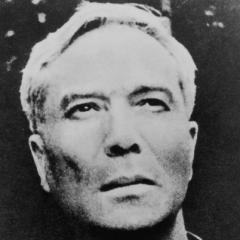
Boris Pasternak
Boris Pasternak

Russian poet, writer, and translator. Boris Pasternak is renowned for his profound psychological insight and beautiful poetic language. His works widely cover themes such as love, humanity, morality, and philosophy, and have had a profound impact on 20th-century literature. more

You May Also Like

“Всичко наоколо туптеше, набъбваше и растеше от вълшебните дрожди на съществоването. Възхищението от живота се носеше като тих полъх, като широка вълна без посока, по земята и през града, през стените и оградите, през дървесината и плътта, и изпълваше с трепет всичко по пътя си...”

“This is how I will portray you, I'll trace your features on paper as the sea, after a fearful storm has churned it up, traces the form of the greatest, farthest-reaching wave on the sand. Seaweed, shells, cork, pebbles, the lightest, most imponderable things that it could lift from its bed, are cast up in a broken, sinuous line on the sand. This line endlessly stretching into the distance is the frontier of the highest tide. That was how life's storm cast you up on my shore, O my pride, that is how I'll portray you.”

“Since the Enlightenment, the political order is an order of freedom. The political structures are no longer given, previous to man's freedom, but are rather realities based on freedom, taken on and modified by man. . . . This new definition of politics carefully distinguishes between state and society. The distinction . . . allows us to differentiate between the public sphere of the state of the Church (or the combination of them) as powers from the public sphere 'in which the interests of all men as a social group are expressed.”

“We should drop the bizarre American fiction that corporations are people, enjoying all the rights of citizens, including unfettered campaign donations as a form of free speech. Indeed, corporations possess greater rights than do people, as they cannot be jailed or executed, while citizens can and do suffer those fates. As the legal historian Zephyr Teachout has observed, the founders would have considered corporate campaign spending the essence of political corruption.”

“...Ironically, three decades later President Barack Obama introduced a universal health insurance bill modeled closely after the Carter bill. Mondale´s former aide Richard Moe wrote that Obamacare ¨bore a striking resemblance to Carter´s proposal three decades before."The legislation pass Congress in 2009 with the support of Senator Kennedy, by then diagnosed with fatal brain cancer. In retrospect, Kennedy´s refusal to support Carter´s incremental, catastrophic national health insurance bill in 1978-79 condemned the country to wait three decades for meaningful healthcare reform. By any measure, this was a tragedy for the country. ¨The miss opportunity,¨ Eizenstat later wrote, ¨haunts me to this day.”

“What is the endgame of all these megaconstructions? Well, in ancient Egypt, the late 6th-dynasty state had not only become so large that it was nonfunctional (think of the giant cable company that never answers the phone), it had also become a mass of intercompeting elites who used the government to serve no one but themselves. (Think of today´s relentless multimillion-dollar bonuses, payoffs, bribes, insider trading, and fraud, all happening openly with no one going to prison.) As the competition ramped up, and as the Egyptian state became impoverished from mismanagement, the end result was nothing less than war.”