Quotessence
Home / Quotes / Quote by Stephen King

Quote by Stephen King

“One way or another, all the bridges between that time n this one have been burned. Time's a reach, too, you know, just like the one that lies between the islands and the mainland, but the only ferry that can cross it is memory, and that's like a ghost-ship - if you want it to disappear, after awhile it will.”

Quote by Stephen King

Work

Dolores Claiborne

Browse quotes and source details for this work. more

Author

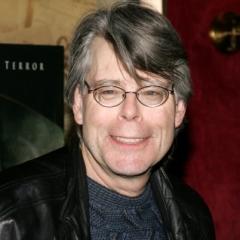
Stephen King
Stephen King

Stephen King, born on September 21, 1947, is a renowned American author. His works primarily focus on horror, fantasy, and science fiction, and have won him a wide audience. King has received numerous literary awards in the United States, including the Edgar Allan Poe Award and the World Fantasy Award. more

You May Also Like

“In Paley's famous illustration, the adaptation of all the parts of the watch to the function, or purpose, of showing the time, is held to be evidence that the watch was specially contrived to that end; on the ground, that the only cause we know of, competent to produce such an effect as a watch which shall keep time, is a contriving intelligence adapting the means directly to that end. Suppose, however, that any one had been able to show that the watch had not been made directly by any person, but that it was the result of the modification of another watch which kept time but poorly; and that this again had proceeded from a structure which could hardly be called a watch at all—seeing that it had no figures on the dial and the hands were rudimentary; and that going back and back in time we came at last to a revolving barrel as the earliest traceable rudiment of the whole fabric. And imagine that it had been possible to show that all these changes had resulted, first, from a tendency of the structure to vary indefinitely; and secondly, from something in the surrounding world which helped all variations in the direction of an accurate time-keeper, and checked all those in other directions; then it is obvious that the force of Paley's argument would be gone. For it would be demonstrated that an apparatus thoroughly well adapted to a particular purpose might be the result of a method of trial and error worked by unintelligent agents, as well as of the direct application of the means appropriate to that end, by an intelligent agent. Now it appears to us that what we have here, for illustration's sake, supposed to be done with the watch, is exactly what the establishment of Darwin's Theory will do for the organic world. For the notion that every organism has been created as it is and launched straight at a purpose, Mr. Darwin substitutes the conception of something which may fairly be termed a method of trial and error. Organisms vary incessantly; of these variations the few meet with surrounding conditions which suit them and thrive; the many are unsuited and become extinguished.”

“The fraction of the mass of two hydrogen atoms that is released as energy when they fuse to produce helium is 0.007 (0.7%). That is the source of the heat produced in the sun and in a hydrogen bomb. It is the amount of mass (m) that is converted to energy (E) in the famous Einstein formula E = mc2, and it is a direct measure of the strong nuclear force. If the strong force had a value of 0.006 or less, the universe would consist only of hydrogen—not very conducive to the complexities of life. If the value were greater than 0.008, all the hydrogen would have been fused shortly after the big bang, and there could be no stars, no solar heat—again, no life. As Stephen Hawking and Leonard Mlodinow put it in their book The Grand Design, “Our universe and its laws appear to have a design that both is tailor-made to support us and, if we are to exist, leaves little room for alteration.”

“The claim of fine tuning is subjective. As I stated before, no measurement in physics is perfect. The amount of precision we demand can be increased or decreased at our whim. We could have an approximate measurement that has a huge margin of error and call it finely-tuned if we so desire. Theists, in particular, have a lot of such desire. They so badly want God to be an indispensable part of our universe's creation, so they see finely-tuned constants. They also tend to sweep under the rug the following fact: the vast majority of our universe is hostile to life, and they fail to consider that another hand in the proverbial deck might yield a better universe than ours, one teaming with life on every planet throughout the cosmos.”

“Be the initiator of things you wish to see, but can’t see. Be the originator of things you wish you feel but can’t feel.”