Quotessence
Home / Quotes / Quote by John Cage

Quote by John Cage

“nothing is accomplished by writing a piece of music nothing is accomplished by hearing a piece of music nothing is accomplished by playing a piece of music our ears are now in excellent condition.”

Quote by John Cage

Work

Silence: Lectures and Writings

This book presents a series of lectures and written works from John Cage, the pioneering American experimental composer renowned for his innovative approach to music and sound. The collection offers insights into Cage's artistic philosophy, his experimental methods, and his unconventional perspectives on the creative process. Through various essays and lectures, Cage discusses concepts related to silence, chance, and the boundaries of musical artistry. As one of the influential figures in twentieth-century avant-garde music, Cage challenged traditional musical conventions and explored the relationship between sound, environment, and performer. The writings reflect his engagement with Eastern philosophical ideas and his collaborative work with artists including Merce Cunningham. The book provides readers with an opportunity to understand the intellectual foundation behind Cage's groundbreaking musical compositions and his lasting impact on contemporary music and art. more

Author
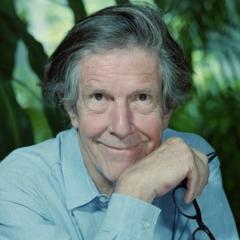
John Cage
John Cage

John Cage (September 5, 1912 - August 12, 1992) was an American composer, music theorist, writer, and experimental musician. Known for his unique approach to music composition and exploration of sound, Cage's works often broke the boundaries of traditional music, profoundly influencing modern music. more

You May Also Like

“Kalkbrenner has made me an offer; that I should study with him for three years, and he will make something really - really out of me. I answered that I know how much I lack; but that I cannot exploit him, and three years is too much. But he has convinced me that I can play admirably when I am in the mood, and badly when I am not; a thing which never happens to him. After close examination he told me that I have no school; that I am on an excellent road, but can slip off the track. That after his death, or when he finally stops playing, there will be no representative of the great piano-forte school. That even if I wish it, I cannot build up a new school without knowing the old one; in a word : that I am not a perfected machine, and that this hampers the flow of my thoughts. That I have a mark in composition; that it would be a pity not to become what I have the promise of being...”

“I'm fine. I'm fine, he says, and fine, fine repeats in his head as he escapes back into the chill. Around him, a spin of bodies in dark coats, tapping thumbs on pads, pressing phones to heads, settling buds into ear canals, projecting an invisible shield of music as they move through the crowd, digital companionship warmer than the bodies around them. Every soul on the street is sunk within its body. Sometimes Bit imagines that he, alone, bears witness to the world.”

“There's a stranger in a car Driving down your street Acts like he knows who you are Slaps his hand on the empty seat and says "Are you gonna get in Or are you gonna stay out?" Just a stranger in a car Might be the one they told you about Well you never were one for cautiousness You open the door He gives you a tender kiss And you can't even hear them no more -- All the voices of choices Now only one road remains And strangers in a car Two hearts Two souls Tonight Two lanes You don't know where you're goin' You don't know what you're doin' Hell it might be the highway to heaven And it might be the road to ruin But this is a song For strangers in a car Baby maybe that's all We really are Strangers in a car (Driving down your street) Just strangers in a car (Driving down your street) Strangers in a car”

“I loved these songs and could still hear them in my head long after and into the next day. They weren't protest songs, though, they were rebel ballads... even in a simple, melodic wooing ballad there'd be rebellion waiting around the corner. You couldn't escape it. There were songs like that in my repertoire, too, where something lovely was suddenly upturned, but in stead of rebellion showing up it would be death itself, the Grim Reaper. Rebellion spoke to me louder. The rebel was alive and well, romantic and honorable. The Grim Reaper wasn't like that.”