Quotessence
Home / Quotes / Quote by Dorothy B. Hughes

Quote by Dorothy B. Hughes

“It was just as well he hadn’t had a chance to be alone with her, he might have fallen. A young doctor, not yet in practice, had nothing to offer an Ellen Hamilton. Moreover, he had no intention of getting involved with any girl until he had paid back the family for their backing him all these years, and was earning enough to support a wife on a decent economic level.”

Quote by Dorothy B. Hughes

Work

The Expendable Man

Browse quotes and source details for this work. more

Author

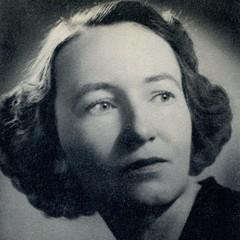
Dorothy B. Hughes
Dorothy B. Hughes

Dorothy B. Hughes was a prominent crime writer whose distinctive style and complex characters left a lasting impact on the genre. Born on August 10, 1904, Hughes' career was marked by her innovative approach to storytelling and her deep psychological insights into her characters. She passed away on May 6, 1993, but her legacy of influential crime fiction endures. more

You May Also Like

“With respect to Stoicism, Hadot has described four features that constitute the universal Stoic attitude. They are, first, the Stoic consciousness of "the fact that no being is alone, but that we make up part of a Whole, constituted by the totality of human beings as well as by the totality of the cosmos"; second, the Stoic "feels absolutely serene, free, and invulnerable to the extent that he has become aware that there is no other evil but moral evil and that the only thing that counts is the purity of moral consciousness"; third, the Stoic "believes in the absolute value of the human person," a belief that is "at the origin of the modern notion of the 'rights of man'"; finally, the Stoic exercises his concentration "on the present instant, which consists, on the one hand, in living as if we were seeing the world for the first and for the last time, and, on the other hand, in being conscious that, in this lived presence of the instant, we have access to the totality of time and of the world." 17 Thus, for Hadot, cosmic consciousness, the purity of moral consciousness, the recognition of the equality and absolute value of human beings, and the concentration on the present instant represent the universal Stoic attitude. The universal Epicurean attitude essentially consists, by way of "a certain discipline and reduction of desires, in returning from pleasures mixed with pain and suffering to the simple and pure pleasure of existing.”