Quotessence
Home / Quotes / Quote by Thom Yorke

Quote by Thom Yorke

“If there is a devil at work then he rests in institutions and not in individuals. Because the beauty of institutions is that any individual can abdicate responsibility. The assumption that we're all utterly powerless, that's the devil at work.”

Quote by Thom Yorke

Author
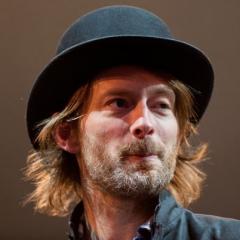
Thom Yorke
Thom Yorke

Thom Yorke is a British musician born on October 7, 1968. He is the lead vocalist and lyricist of the renowned rock band Radiohead, known for his distinctive voice and profound lyrics. more

You May Also Like

“[The Kerner R]eport does not say that Americans are racist. If it did, the only answer would be to line everybody up, all 200 million of us, then line up 200,000 psychiatrists, and have us all lie on couches for ten years trying to understand the problem and for ten years more learning how to deal with it. All over the country people are beating their breasts crying mea culpa--"I'm so sorry that I am a racist"--which means, really, that they want to cop out because if racism is to be solved on an individual psychological basis, then there is little hope. What the Kerner Report is really saying is that the institutions of America brutalize not only Negroes but also whites who are not racists but who in many communities have to use racist institutions. When it is put on that basis, we know we cannot solve the fundamental problem by sitting around examining our innards, but by getting out and fighting for institutional change.”

“Nobody can plan the actions of even a thousand living persons, separately. Anyone attempting to control millions must divide them into classes, and make a plan applying to these classes. But these classes do not exist. No two persons are alike. No two are in the same circumstances; no two have the same abilities; beyond getting the barest necessities of life, no two have the same desires. Therefore the men who try to enforce, in real life, a planned economy that is their theory, come up against the infinite diversity of human beings. The most slavish multitude of men that was ever called "demos" or "labor" or "capital" or "agriculture" or "the masses," actually are men; they are not sheep. Naturally, by their human nature, they escape in all directions from regulations applying to non-existent classes. It is necessary to increase the number of men who supervise their actions. Then (for officials are human, too) it is necessary that more men supervise the supervisors. Still, individuals will continue to act individually, in ways that they plan. These ways do not fit into Authority's plan. So still more men are needed, imperatively needed, to stop or to supervise these new ways of acting; and more men to supervise these supervisors; and more men to co-ordinate the constantly increasing complexity of all this supervision. An attempt to exercise a control of individuals that in reality does not exist, must increase in volume.”

“Each individual is linked not only to his biological ancestors but also to traditions of activity and information and thought and belief and value; nearly all of what anyone most distinctively and independently is he owes to many others. The taking over and passing on – with perhaps some changes – of a cultural inheritance is itself a part of the good life, and this too is a social relation to which there belong appropriate sorts of conflict as well as cooperation.”

“Democracy is that system of government and that economic and social organization in which the worth of the individual human being and the multiple loyalties of that individual are the most fully recognized and provided for. Democracy is a system of government in which we recognize that all normal individuals have a whole series of loyalties—loyalties to their churches, their labor unions, their fraternal organizations, their social groups, their nationality groups, their athletic groups, their political parties, and many others. Democracy provides for the fulfillment of the hopes and loyalties of our people to all of the various institutions and groups of which they are a part. It is not a single, unqualified, primary loyalty to the state, as the totalitarians would have it—a loyalty in which all other institutions and organizations are completely swept out of the picture. Under totalitarianism, you may be loyal to your church if your state decrees that you may be. But it is a loyalty by sufferance of the state.”

“But we don’t merely meet each other as unique individuals or in healthy social circumstances. We meet each other in the current atmosphere of disconnection and distrust. We meet each other as members of groups. We meet each other embedded in systems of power in which some groups have more and some groups have less. We meet each other in a society in which members of the red team and members of the blue team often stand apart and glare across metaphorical walls with bitterness and incomprehension. Our encounters are shaped by our historical inheritances—the legacies of slavery, elitism, sexism, prejudice, bigotry, and economic and social domination. You can’t get to know another person while pretending not to see ideology, class, race, faith, identity, or any of the other fraught social categories. These days, if you want to know someone well, you have to see the person in front of you as a distinct and never-to-be repeated individual. But you’ve also got to see that person as a member of their groups. And you’ve also got to see their social location—the way some people are insiders and other people are outsiders, how some sit on the top of society and some are marginalized to the fringes. The trick is to be able to see each person on these three levels all at once.”