Quotessence
Home / Quotes / Quote by Iris Murdoch

Quote by Iris Murdoch

Work

The Nice and the Good

This book delves into the intricate tapestry of human behavior, examining the nuances between niceness and goodness in various social and ethical contexts. more

Author
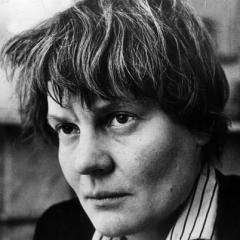
Iris Murdoch
Iris Murdoch

Iris Murdoch was an Irish-Canadian philosopher and author, born on July 15, 1919, in Dublin, Ireland, and passed away on February 8, 1999. She is celebrated for her philosophical novels that intertwine moral and ethical dilemmas with complex narratives. Murdoch's work has left a lasting impact on the literary world, particularly in the latter half of the 20th century. more

You May Also Like

“The priest gazed around my cell and answered in a voice that sounded very weary to me. 'Every stone here sweats with suffering, I know that. I have never looked at them without a feeling of anguish. But deep in my heart I know that the most wretched among you have seen a divine face emerge from their darkness. That is the face you are asked to see.' This perked me up a little. I said I had been looking at the stones in these walls for months. There wasn't anything or anyone in the world I knew better. Maybe at one time, way back, I had searched for a face in them. But the face I was looking for was as bright as the sun and the flame of desire—and it belonged to Marie.”

“Until modern times, we focused a great deal of the best of our thought upon rituals of return to the human condition. Seeking enlightenment or the Promised Land or the way home, a man would go or be forced to go into the wilderness, measure himself against the Creation, recognize finally his true place within it, and thus be saved both from pride and from despair. Seeing himself as a tiny member of a world he cannot comprehend or master or in any final sense possess, he cannot possibly think of himself as a god. And by the same token, since he shares in, depends upon, and is graced by all of which he is a part, neither can he become a fiend; he cannot descend into the final despair of destructiveness. Returning from the wilderness, he becomes a restorer of order, a preserver. He sees the truth, recognizes his true heir, honors his forebears and his heritage, and gives his blessing to his successors. He embodies the passing of human time, living and dying within the human limits of grief and joy. (pg.95, "The Body and the Earth")”