Quotessence
Home / Quotes / Quote by Thiruvalluvar

Quote by Thiruvalluvar

Work

Thirukkural

Browse quotes and source details for this work. more
Author

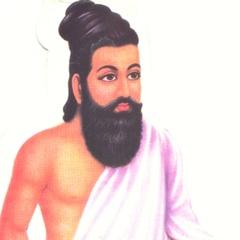
Thiruvalluvar
Thiruvalluvar

Thiruvalluvar was a renowned Tamil poet and philosopher, best known as the author of the Thirukkural, a classic Tamil literary work consisting of 1,330 couplets. Living sometime between the 2nd century BCE and the 8th century CE, his exact dates remain uncertain. The Thirukkural is divided into three sections: Aram (Righteousness), Porul (Wealth), and Inbam (Love), covering ethics, morality, and human relationships. Considered the greatest work of Tamil literature, it has profoundly influenced Tamil culture and is revered as a sacred text by Tamil people worldwide. more

You May Also Like

“The Friend of Your Youth is the only friend you will ever have, for he hasn’t the slightest concern with calculating his interest or your virtue. He doesn’t give a damn, for the moment, about Getting Ahead or Needs Must Admiring the Best, the two official criteria in adult friendships, and when the boring stranger appears, he puts out his hand and smiles (not really seeing your face) and speaks your name (which doesn’t really belong to your face), saying, “Well, Jack, damned glad you came, come on in, boy!”

“I certainly didn't concur with Edward on everything, but I was damned if I would hear him abused without saying a word. And I think this may be worth setting down, because there are other allegiances that can be stress-tested in comparable ways. It used to be a slight hallmark of being English or British that one didn't make a big thing out of patriotic allegiance, and was indeed brimful of sarcastic and critical remarks about the old country, but would pull oneself together and say a word or two if it was attacked or criticized in any nasty or stupid manner by anybody else. It's family, in other words, and friends are family to me. I feel rather the same way about being an American, and also about being of partly Jewish descent. To be any one of these things is to be no better than anyone else, but no worse. When confronted by certain enemies, it is increasingly the 'most definitely no worse' half of this unspoken agreement on which I tend to lay the emphasis. (As with Camus’s famous 'neither victim nor executioner,' one hastens to assent but more and more to say 'definitely not victim.')”