Quotessence
Home / Quotes / Quote by Nick Hornby

Quote by Nick Hornby

“I'd hoped for someone who was remarkably intelligent, but disadvantaged by home circumstance, someone who only needed an hour's extra tuition a week to become some kind of working-class prodigy. I wanted my hour a week to make the difference between a future addicted to heroin and a future studying English at Oxford. That was the sort of kid I wanted, and instead they'd given me someone whose chief interest was in eating fruit. I mean, what did he need to read for? There's an international symbol for the gents' toilets, and he could always get his mother to tell him what was on television.”

Quote by Nick Hornby

Work

A Long Way Down

In 'A Long Way Down,' readers are taken on a poignant journey as two individuals, struggling with their own personal crises, find solace and connection in each other's company. The narrative unfolds from the moment they decide to jump from a rooftop, and the reader is privy to their innermost thoughts and feelings. The novel delves into the complexities of human emotions, the nature of despair, and the possibility of redemption. With vivid character development and a compelling plot, 'A Long Way Down' is a thought-provoking read that challenges the reader's perspective on life and death. more

Author

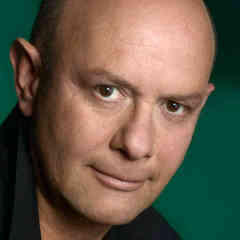
Nick Hornby
Nick Hornby

Nick Hornby is a renowned British novelist celebrated for his witty and insightful storytelling. Born on April 17, 1957, his works delve into the intricacies of modern life and human relationships. Known for his distinctive writing style, Hornby has captured the hearts of readers worldwide with his engaging narratives. more

You May Also Like

“Here on the beautiful island of Malta, where I live, I was once asked a powerful question during a book signing. A notorious journalist leaned in and said, "What is an Enlightened State?" An Enlightened State is not an achievement in the conventional sense it is a profound act of reverse engineering. But not the kind that dissects machines or maps systems. It is the sacred reversal humanity most deeply requires: the path that leads us home to innocence. This innocence is not naivety, nor ignorance. It is not a lack of experience, but a return to primordial purity-a state of being unburdened by guilt, fear, ambition, or ego. It is the deep simplicity before complexity, the clarity before confusion, the soul before the self was fragmented. We live in an age that exalts forward motion-growth, evolution, mastery. We measure success by how far we reach, how much we accumulate, how fluently we command machines and build towers of silicon. But in this relentless pursuit of becoming, we seldom ask: What was lost in the building? What sacred parts of ourselves were quietly exiled in the name of progress? To truly 'reverse engineer' the self is not regression, but conscious unlearning. It is the peeling away of fear, pride, and overcomplexity. It is the courageous act of remembering what was once whole, simple, and true. In Sanskrit, this wholeness is known as Prajñā-pure, primordial wisdom. It is not learned, but revealed. Not built, but uncovered. It is the light behind the eyes, the stillness beneath the noise, the truth that precedes all stories. And so, the highest evolution may not lie in becoming more, but in becoming less-until what remains is real. Until we return not to a time, but to a state. Until we remember not what we have done, but who we are. This is the journey home to innocence. This is the return to Prajñā. This is awakening.”