Quotessence
Home / Quotes / Quote by Arthur C. Clarke

Quote by Arthur C. Clarke

Work

Childhood’s End

Arthur C. Clarke's novel depicts a future where humanity achieves a utopian existence, only to face the loss of its individuality and the end of traditional childhood. more
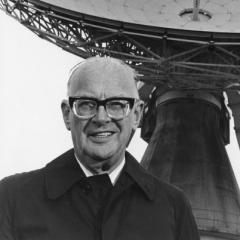
Author

Arthur C. Clarke
Arthur C. Clarke

Arthur C. Clarke was a British science fiction author, writer, and science popularizer. Known for his science fiction novels and predictions about future technology, his most famous works include '2001: A Space Odyssey' and 'Rendezvous with Rama'. Clarke's science fiction novels are not only literarily valuable but also had a profound impact on science fiction films and television. more

You May Also Like

“Oh, keep your warnings and your fears for those giddy women who call themselves women of feeling, whose heated imaginations persuade them that nature has placed their senses in their heads; who, having never thought about it, invariably confuse love with a lover; who, with their stupid delusions, imagine that the man with whom they have found pleasure is pleasure's only source; and, like all the superstitious, accord that faith and respect to the priest which is due to only the divinity.”

“... since I was still, and must for long remain, in that period of life when one has not yet separated the fact of this sensual pleasure from the various women in whose company one has tasted it, when one has not reduced it to a general idea which makes one regard them thenceforward as the variable instruments of a pleasure that is always the same. Indeed, that pleasure does not exist, isolated and formulated in the consciousness, as the ultimate object with which one seeks a woman's company, or as the cause of the uneasiness which, in anticipation, one then feels. Hardly even does one think of oneself, but only how to escape from oneself.”

“In his younger days a man dreams of possessing the heart of the woman he loves; later, the feeling that he possesses the heart of a woman may be enough to make him fall in love with her. And 50, at an age when it would appear - since one seeks in love before everything else a subjective pleasure - that the taste for feminine beauty must play the larger part in its procreation, love may come into being, love of the most physical order, without any foundation in desire. At this time of life a man has already been wounded more than once by the darts of love; it no longer evolves by itself, obeying its own incomprehensible and fatal laws, before his passive and astonished heart. We come to its aid; we falsify it by memory and by suggestion; recognising one of its symptoms we recall and recreate the rest.”