“They were all pseudo-women in search of pseudo-men. To this idea the roughs undoubtedly pandered, either permanently because it was part of some self-congratulatory idea they had of themselves, or temporarily whenever they were with us. They consciously tried to embody the myth of the great dark man which haunts the dreams of pathological homosexuals and is the cause of one of their dilemmas. This problem is similar to the one that confronts heterosexuals who happen to be ever so for virgins.”
Quote by Quentin Crisp
Work
The Naked Civil Servant
Browse quotes and source details for this work. more
Author
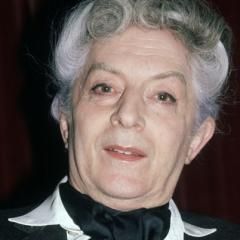
Quentin Crisp
Quentin Crisp (December 25, 1908 – November 21, 1999) was an English writer, actor, and social commentator, best known for his flamboyant style and open homosexuality during a time of widespread prejudice. Born Denis Charles Pratt in Sutton, London, he later adopted the name Quentin Crisp. His 1968 autobiography, 'The Naked Civil Servant,' chronicled his life as an openly gay man in conservative Britain, and was adapted into a critically acclaimed TV film starring John Hurt. Crisp also wrote 'How to Have a Style' and 'Manners from Heaven,' and appeared in films like 'Orlando' and 'The Bride.' He moved to New York in the 1980s, becoming a cultural icon known for his wit and advocacy of individuality. He died in Manchester at age 90. more
You May Also Like
Source: The 1946 London Lectures
Source: The Naked Civil Servant
Source: The Naked Civil Servant
Source: The Naked Civil Servant
Source: Halloween Mating
“Do you want to be my plaything, my slut, or my fucktoy?”
Source: Halloween Mating
Source: Sex Is as Sex Does: Governing Transgender Identity
Source: Sex Is as Sex Does: Governing Transgender Identity
Source: Reclaiming Femininity: Saving Women's Traditions & Our Future
“Women are biologically made, not surgically designed.”
Source: Reclaiming Femininity: Saving Women's Traditions & Our Future