Quotessence
Home / Quotes / Quote by Virginia Woolf

Quote by Virginia Woolf

Work

A Writer's Diary

This book offers a glimpse into the thoughts and experiences of a celebrated writer, providing readers with a unique perspective on the creative process and the challenges of crafting literature. more
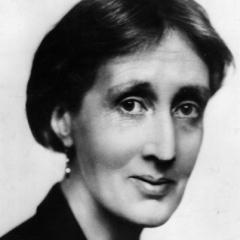
Author

Virginia Woolf
Virginia Woolf

British modernist writer, known for her unique narrative techniques and profound portrayal of female experience. Her works include 'To the Lighthouse' and 'Mrs. Dalloway'. more

You May Also Like

“The same virtues, in the end, the same virtue (love), are required throughout, and fantasy (self) can prevent us from seeing a blade of grass just as it can prevent us from seeing another person. An increasing awareness of 'goods' and the attempt (usually only partially successful) to attend to them purely, without self, brings with it an increasing awareness of the unity and interdependence of the moral world. One-seeking intelligence is the image of faith.”

“I wish I could breathe a Nabokovian air. I wish I could have the Olympian freedom of sensibility that disdains, in his autobiography, to give the Russian Revolution more than a passing mention, as if such common events did not have the power to wreak fundamental changes in his own life, or as if it were vulgar, tactless, to dwell on something so brutishly, so crudely collective. I wish I could define myself -a s Nabokov defines both himself and his characters - by the telling detail, as preference for months over lozenges, an awkwardness at cricket, a tendency to lose floes or umbrellas. I wish I could live in a world of prismatic reflections, carefully distinguished colours of sunsets and English scarves, synthetic repetitions and reiterative surprises - a world in which even a reddened nostril can be rendered as a delicious hue rather than a symptom of a discomfiting common cold. I wish I could attain such a world because in part that is our most real, and most loved world - the world of utterly individual sensibility, untrampled by history, or horrid intrusions of social circumstance. Oh ye, I think the Nabokovian world is lighted, lightened, and enlightened by the most precise affection. Such affection is unsentimental because it is free and because it attaches to free objects. It can notice what is adorable (or odious, for that matter), rather than what is formed and deformed by larger forces. Characters, in Nabokov's fiction, being perfectly themselves, attain the graced amorality of aesthetic objects.”

“The soul can shrivel from am excess of critical distance, and if I don't want to remain in arid internal exile for the rest of my life, I have to find a way to lose alienation without losing my self. But how does one bend toward another culture without falling over, how does one strike an elastic balance between rigidity and self-effacement?”