Quotessence
Home / Quotes / Quote by Pablo Picasso

Quote by Pablo Picasso

Author

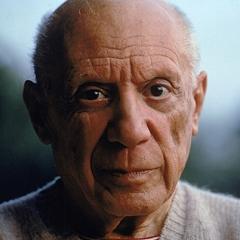
Pablo Picasso
Pablo Picasso

Spanish painter and one of the most influential figures in 20th-century art. Picasso is renowned for his unique artistic style and prolific career, encompassing various fields such as painting, sculpture, and printmaking. His paintings have gone through several phases, from the early Blue Period to the later Cubism, profoundly impacting 20th-century art. more

You May Also Like

“The same sensitivity that opens artists to Being also makes them vulnerable to the dark powers of non-Being. It is no accident that many creative people--including Dante, Pascal, Goethe, Nietzsche, Kierkegaard, Beethoven, Rilke, Blake, and Van Gogh--struggled with depression, anxiety, and despair. They paid a heavy price to wrest their gifts from the clutches of non-Being. But this is what true artists do: they make their own frayed lives the cable for the surges of power generated in the creative force fields of Being and non-Being. (Beyond Religion, p. 124)”

“both you and paintings are layered… first, ephemera and notations on the back of the canvas. Labels indicate gallery shows, museum shows, footprints in the snow, so to speak. Then pencil scribbles on the stretcher, usually by the artist, usually a title or date. Next the stretcher itself. Pine or something. Wooden triangles in the corners so the picture can be tapped tighter when the canvas becomes loose. Nails in the wood securing the picture to the stretcher. Next, a canvas: linen, muslin, sometimes a panel; then the gesso - a primary coat, always white. A layer of underpaint, usually a pastel color, then, the miracle, where the secrets are: the paint itself, swished around, roughly, gently, layer on layer, thick or thin, not more than a quarter of an inch ever -- God can happen in that quarter of an inch -- the occasional brush hair left embedded, colors mixed over each other, tones showing through, sometimes the weave of the linen revealing itself. The signature on top of the entire goulash. Then varnish is swabbed over the whole. Finally, the frame, translucent gilt or carved wood. The whole thing is done.”