Quotessence
Home / Quotes / Quote by Carol Tavris

Quote by Carol Tavris

“Once people commit themselves to an opinion about "Who started this?," whatever the "this" may be—a family quarrel or an international conflict—they become less able to accept information that is dissonant with their position. Once they have decided who the perpetrator is and who the victim is, their ability to empathize with the other side is weakened, even destroyed. How many arguments have you been in that sputtered out with unanswerable "but what about?"s? As soon as you describe the atrocities that one side has committed, someone will protest: "But what about the other side's atrocities?”

Quote by Carol Tavris

Work

Mistakes Were Made (But Not by Me): Why We Justify Foolish Beliefs, Bad Decisions, and Hurtful Acts

Mistakes Were Made (But Not by Me) delves into the human tendency to rationalize errors and undesirable behaviors. The book examines various psychological phenomena that contribute to this justification, offering insights into why people may cling to foolish beliefs and make poor decisions despite evidence to the contrary. more

Author
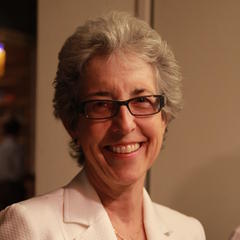
Carol Tavris
Carol Tavris

Carol Tavris is a renowned psychologist, born on September 17, 1944. Her research focuses on psychology, cognitive psychology, and critical thinking. Tavris is known for her profound insights into psychology and her extensive influence on public cognition. more

You May Also Like

“Perhaps the greatest lesson of dissonance theory is that we can't wait around for people to have moral conversions, personality transplants, sudden changes of heart, or new insights that will cause them to sit up straight, admit error, and do the right thing. Most human beings and institutions are going to do everything in their power to reduce dissonance in ways that are favorable to them, that allow them to justify their mistakes and maintain business as usual. They will not be grateful for the evidence that their methods of interrogation have put innocent people in prison for life. They are not going to thank us for pointing out to them why their study of some new drug, into whose development they have poured millions, is fatally flawed. And no matter how deftly or gently we do it, even the people who love us dearly are not doing to be amused when we correct their fondest self-serving memory ... with the facts.”

“Nisam propustio, ipak, da zapazim šta je značila istinska vera, samim tim i snažna motivacija za fizički rad, kod onih medicinara sa kojima sam studirao, a koji su sa četrdesetak kilograma telesne težine postajali udarnici. Ništa im nije bilo teško da urade, nisu se razboleli od preteškog rada, a još su stizali da uče i da spremaju za večernje konferencije markstističke referate! To mi je bila prva vera i iskreno ubeđenje, kao što sam, još tada, naslutio na kojim temeljima počiva psihosomatska medicina, tj. kada se i zbog čega ljudi uopšte razboljevaju.”

“Sa stanovišta monoteizma, koji je doveden do njegovih logičnih posledica, nema rasprave oko prirode boga; nijedan čovek ne može da pretpostavi da poseduje bilo kakvo znanje o bogu, koje mu dozvoljava da kritikuje ili osuđuje druge ljude, ili da tvrdi da je njegova ideja o bogu jedina ispravna. Religiozna netolerancija, tako karakteristična za zapadnjačke religije, koja izvire iz takvih tvrdnji i, psihološki govoreći, izvire iz nedostatka vere ili ljubavi, imala je poražavajuće efekte na religiozni razvoj.”

“If I can convince the conscious mind that TMS is not serious and not worthy of its attention, better yet that it is a phony, a charade, and that rather than fear it one should ridicule it, that most of the structural diagnoses are not valid and that the only things worthy of one's attention are the repressed feelings, what has been accomplished? We will have made the TMS useless; it will no longer have the ability to attract the attention of the conscious mind; the defense is a failure (the cover is blown, the camouflage is removed), which means the pain ceases. If that all sounds like something out of science fiction or Grimm's fairy tales, one can only say that it works and has worked in a few thousand people over the last seventeen years. (page 87)”

“Unfortunately, society is still backward about the need for and the place of psychotherapy, and there is a common feeling that anyone who needs psychotherapy is weak or incompetent. To harbor repressed feelings has nothing to do with strength of character or mental competence. And yet we are so unenlightened about this matter in the United States that one is virtually ruled out of seeking public office if he or she has ever been in psychotherapy. (page 102)”

“We're going to try to stop the body from reacting physically to your emotions." "We want you to learn to send messages to the subconscious mind." "Information is the penicillin that cures this disorder." "The cure is knowledge." "Until now, your subconscious mind has been in charge; I'm going to teach you how to have your conscious mind take over." "Get mad at your brain; talk to it; give it hell." "TMS is a trick your mind is playing on you - don't fall for it." "TMS is a sideshow designed to distract you from what is going on emotionally." "The symptoms are an act to mask what's going on in the psyche." "Most of the structural changes in your spine are natural occurrences." "The brain doesn't want to face up to the repressed anger, so it is running away from it." "By laughing at or ignoring the pain, you are teaching the brain to send new messages to the muscles." (page 106)”

“A placebo cure is almost always temporary, and we are looking for permanent resolution of the pain. Therefore, we would not be satisfied with a placebo cure. This is all too common. People are administered a large variety of physical treatments, feel better for a few days, and then need another treatment. (And, of course, they never overcome their fear of physical activity.) One of the reasons I know the TMS program does not induce a placebo reaction is the fact that almost all patients have permanent resolution of symptoms. A second reason is that the placebo effect is based on blind faith; patients know little or nothing about the disorder they have and the rationale for treatment. They simply trust the treating practitioner. The educational program employed in the treatment of TMS is the very opposite. I teach patients literally all I know about the disorder; they are encouraged to ask questions, and they are warned that they must find the diagnosis logical and consistent. Their recovery depends on information, on awareness. They are active participants in the recovery process. This is anything but a placebo process. Perhaps the most compelling argument that what we do is not a placebo is the fact that on numerous occasions since the publication of the book Mind Over Back Pain, the predecessor of this one, people have reported complete and permanent resolution of pain simply by reading the book. There is no personality influence here, no bedside manner; just plain, solid information. And we have learned that that's what it takes to banish TMS. (page 109)”

“Patients are taught that there is no correct way to bend or lift, one doesn't need to avoid soft chairs or mattresses, corsets and collars are unnecessary, and in general the great number of admonitions and prohibitions that have become part of back pain folklore are simply without foundation, because TMS is a harmless condition, and there is nothing structurally wrong with the back. Running is not bad for the spine; weak abdominal muscles do not cause back pain; strong back muscles do not prevent back pain; it is perfectly all right to arch the back, swim the crawl or breast stroke; man was meant to walk upright (Homo sapiens and his ancestors have been doing so for somewhere between 3 and 4 million years); a short leg does not cause back pain. One could go on and on. (page 110)”