“Dear Lord," he said, "let me be like Aron. Don’t make me mean. I don’t want to be. If you will let everybody like me, why, I’ll give you anything in the world, and if I haven’t got it, why, I’ll go for to get it. I don’t want to be mean. I don’t want to be lonely. For Jesus’ sake, Amen.” Slow warm tears were running down his cheeks. His muscles were tight and he fought against making any crying sound or sniffle. Aron whispered from his pillow in the dark, "You're cold. You've got a chill." He stretched out his hand to Cal's arm and felt the goose bumps there. He asked softly, "Did Uncle Charles have any money?" "No," said Cal. "Well, you were out there long enough. What did Father want to talk about?" Cal lay still, trying to control his breathing. "Don't you want to tell me?" Aron asked. "I don't care if you don't tell me." "I'll tell," Cal whispered. He turned on his side so that his back was toward his brother. "Father is going to send a wreath to our mother. A great big goddam wreath of carnations." Aron half sat up in bed and asked excitedly, "He is? How's he going to get it clear there?" "On the train. Don't talk so loud." Aron dropped back to a whisper. "But how's it going to keep fresh?" "With ice," said Cal. "They're going to pack ice all around it." Aron asked, "Won't it take a lot of ice?" "A whole hell of a lot of ice," said Cal. "Go to sleep now." Aron was silent, and then he said, "I hope it gets there fresh and nice." "It will," said Cal. And in his mind he cried, "Don't let me be mean.”
Quote by John Steinbeck
Work
John Steinbeck's 'East of Eden' is a profound and complex narrative that delves into the lives of the Joad family as they navigate the challenges of their time. The story is rich with symbolism and philosophical musings, offering a rich tapestry of human emotions and societal struggles. more
Author
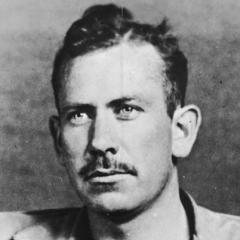
John Steinbeck was an American author renowned for his profound depiction of American society and the lives of farmers. His works often explore themes of poverty, social injustice, and human nature. Steinbeck was awarded the Nobel Prize in Literature in 1962 for his significant contribution to American literature. more
You May Also Like
“Silently and sadly, the village lived its simple life.”
“Sometimes, we carry our troubles so plainly that everyone can see them.”
“Quando algo se perde, ao voltarmos a encontrá-lo, pode não ser mais o mesmo.”
“Mal posso esperar até ficarem livres de mim”
“If only letting go of memories was as easy as letting go of people.”