Quotessence
Home / Quotes / Quote by Gilbert Parker

Quote by Gilbert Parker

Work

The Judgment House

Browse quotes and source details for this work. more
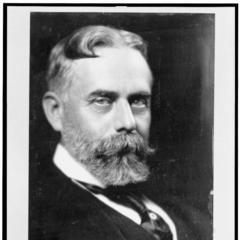
Author

Gilbert Parker
Gilbert Parker

Gilbert Parker, born on November 23, 1862, was a renowned British novelist. His works are known for their detailed portrayal of rural life and social changes in England, which have won him great popularity among readers. more

You May Also Like

“There are some who, from obtuseness or lack of experience, turn away from such phenomena as from 'folk-diseases,' with contempt or pity born of the consciousness of their own 'healthy- mindedness.' But of course such poor wretches have no idea how corpselike and ghostly their so-called 'healthy-mindedness' looks when the glowing life of the Dionysian revelers roars past them.”

“When you listen to an old record, there can be no illusion that you are present at a performance. You are listening through a gray drizzle of static, a sound like rain. You can never forget how far away you are. You always hear it, the sound of distance in time. But what is the connection between the listener and the musician? Does it matter that one of you is alive and one is dead, and which is which?”

“All art constantly aspires towards the condition of music. For while in all other kinds of art it is possible to distinguish the matter from the form, and the understanding can always make this distinction, yet it is the constant effort of art to obliterate it. That the mere matter of a poem, for instance, its subject, namely, its given incidents or situation—that the mere matter of a picture, the actual circumstances of an event, the actual topography of a landscape—should be nothing without the form, the spirit, of the handling, that this form, this mode of handling, should become an end in itself, should penetrate every part of the matter: this is what all art constantly strives after, and achieves in different degrees.”

“What modern art has to do in the service of culture is so to rearrange the details of modern life, so to reflect it, that it may satisfy the spirit. And what does the spirit need in the face of modern life? The sense of freedom. That naive, rough sense of freedom, which supposes man's will to be limited, if at all, only by a will stronger than his, he can never have again. The attempt to represent it in art would have so little verisimilitude that it would be flat and uninteresting. The chief factor in the thoughts of the modern mind concerning itself is the intricacy, the universality of natural law, even in the moral order. For us, necessity is not, as of old, a sort of mythological personage without us, with whom we can do warfare: it is a magic web woven through and through us, like that magnetic system of which modern science speaks, penetrating us with a network, subtler than our subtlest nerves, yet bearing in it the central forces of the world. Can art represent men and women in these bewildering toils so as to give the spirit at least an equivalent for the sense of freedom? Certainly, in Goethe's romances, and even more in the romances of Victor Hugo, there are high examples of modern art dealing thus with modern life, regarding that life as the modern mind must regard it, yet reflecting upon blitheness and repose. Natural laws we shall never modify, embarrass us as they may; but there is still something in the nobler or less noble attitude with which we watch their fatal combinations. In those romances of Goethe and Victor Hugo, in some excellent work done after them, this entanglement, this network of law, becomes the tragic situation, in which certain groups of noble men and women work out for themselves a supreme Denouement. Who, if he saw through all, would fret against the chain of circumstance which endows one at the end with those great experiences?”