“The argument has long been made that we humans are by nature compassionate and empathic despite the occasional streak of meanness, but torrents of bad news throughout history have contradicted that claim, and little sound science has backed it. But try this thought experiment. Imagine the number of opportunities people around the world today might have to commit an antisocial act, from rape or murder to simple rudeness and dishonesty. Make that number the bottom of a fraction. Now for the top value you put the number of such antisocial acts that will actually occur today. That ratio of potential to enacted meanness holds at close to zero any day of the year. And if for the top value you put the number of benevolent acts performed in a given day, the ratio of kindness to cruelty will always be positive. (The news, however, comes to us as though that ratio was reversed.) Harvard's Jerome Kagan proposes this mental exercise to make a simple point about human nature: the sum total of goodness vastly outweighs that of meanness. 'Although humans inherit a biological bias that permits them to feel anger, jealousy, selfishness and envy, and to be rude, aggressive or violent,' Kagan notes, 'they inherit an even stronger biological bias for kindness, compassion, cooperation, love and nurture – especially toward those in need.' This inbuilt ethical sense, he adds, 'is a biological feature of our species.”
Quote by Daniel Goleman
Work
Social Intelligence: The New Science of Human Relationships
This book delves into the latest research on social intelligence, examining how individuals navigate and understand the complexities of human relationships. It investigates the role of emotional intelligence in forming connections and fostering empathy. more
Author
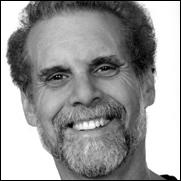
Daniel Goleman
Daniel Goleman is an American psychologist and author, renowned for his contributions to the field of emotional intelligence (EQ). His book 'Emotional Intelligence' became an international bestseller and propelled the importance of emotional intelligence in education, the workplace, and personal development. more
You May Also Like
“Those who had nothing substantial to brag about bragged the loudest.”
Source: Katabasis
Source: The Adventures of Tom Sawyer
Source: World After
Source: Katabasis
Source: The Ugly Princess
Source: Stand on Zanzibar
Source: Scaramouche
Source: I Have No Mouth & I Must Scream
Source: Memories of My Melancholy Whores
Source: A Perfectly Good Family