Quotessence
Home / Quotes / Quote by Robert Bly

Quote by Robert Bly

“They wrote to me and said something about it, and I said that if it doesn't involve any work, I'll do it. (On being named Minnesota's first Poet Laureate)”

Quote by Robert Bly

Author
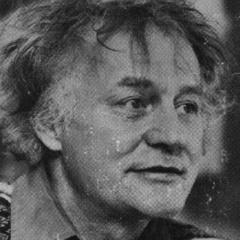
Robert Bly
Robert Bly

Robert Bly, born on December 23, 1926, is a renowned American poet. His poetry is known for its profound emotion and rich imagination, which has had a profound impact on contemporary poetry. more

You May Also Like

“I would like at this moment to announce that I will be retiring from this program in two weeks' time because of poor ratings. Since this show is the only thing I had going for me in my life, I've decided to kill myself. I'm going to blow my brains out right on this program a week from today. So tune in next Tuesday. That should give the public relations people a week to promote the show. You ought to get a hell of a rating out of that. 50 share, easy.”

“Do you know why hurricanes have names instead of numbers? To keep the killing personal. No one cares about a bunch of people killed by a number. '200 Dead as Number Three Slams Ashore' is not nearly as interesting a headline as 'Charlie kills 200.' Death is much more satisfying and entertaining if you personalize it. Me, I'm still waitin' for Hurricane Ed. Old Ed wouldn't hurt ya, would he? Sounds kinda friendly. 'Hell no, we ain't evacuatin'. Ed's comin'!”

“You still long for freedom, my friend, and that longing is your cage. You do not even realize what you are missing, or what it is that you are longing for, but something in you calls out to be aware. You have become parched in the desert of apathy, and thirst for the Bacchic springs forever out of your reach. And while your highest aspects thirst for freedom, so too your basest roots thrust outwards and strangle the hopes—”

“Soon after this incident the court rose. As I was being taken from the courthouse to the prison van, I was conscious for a few brief moments of the once familiar feel of a summer evening out-of-doors. And, sitting in the darkness of my moving cell, I recognized, echoing in my tired brain, all the characteristic sounds of a town I'd loved, and of a certain hour of the day which I had always particularly enjoyed. The shouts of newspaper boys in the already languid air, the last calls of birds in the public garden, the cries of sandwich vendors, the screech of streetcars at the steep corners of the upper town, and that faint rustling overhead as darkness sifted down upon the harbor—all these sounds made my return to prison like a blind man's journey along a route whose every inch he knows by heart. Yes, this was the evening hour when—how long ago it seemed!—I always felt so well content with life. Then, what awaited me was a night of easy, dreamless sleep. This was the same hour, but with a difference; I was returning to a cell, and what awaited me was a night haunted by forebodings of the coming day. And so I learned that familiar paths traced in the dusk of summer evenings may lead as well to prisons as to innocent, untroubled sleep.”