Quotessence
Home / Quotes / Quote by Hermann Hesse

Quote by Hermann Hesse

“I had a feeling that he was unhappy and that he had an undesired, powerful way of seizing on people as if he wanted to snatch something from them that would comfort him.”
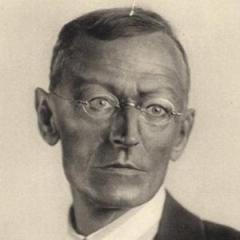
Quote by Hermann Hesse

Work

Gertrude

Gertrude is a narrative that delves into the complexities of human connections and the search for self. The story follows the life of Gertrude, a character whose journey is marked by personal growth and introspection. more

Author

Hermann Hesse
Hermann Hesse

Hermann Hesse was a German poet and novelist, born on July 2, 1877, and died on August 9, 1962. Known for his profound psychological descriptions and exploration of human nature, his works include classics such as 'Steppenwolf' and 'The Glass Bead Game'. more

You May Also Like

“I would like [my readers] to better understand human beings and human life as a result of having read [my] stories. I'd like them to feel that this was an experience that made things better for them and an experience that gave them hope. I think that the kind of things that we talk about at this conference -- fantasy very much so, science fiction, and even horror -- the message that we're sending is the reverse of the message sent by what is called "realistic fiction." (I happen to think that realistic fiction is not, in fact, realistic, but that's a side issue.) And what we are saying is that it doesn't have to be like this: things can be different. Our society can be changed. Maybe it's worse, maybe it's better. Maybe it's a higher civilization, maybe it's a barbaric civilization. But it doesn't have to be the way it is now. Things can change. And we're also saying things can change for you in your life. Look at the difference between Severian the apprentice and Severian the Autarch [in The Book of the New Sun], for example. The difference beteween Silk as an augur and Silk as calde [in The Book of the Long Sun]. You see? We don't always have to be this. There can be something else. We can stop doing the thing that we're doing. Moms Mabley had a great line in some movie or other -- she said, "You keep on doing what you been doing and you're gonna keep on gettin' what you been gettin'." And we don't have to keep on doing what we've been doing. We can do something else if we don't like what we're gettin'. I think a lot of the purpose of fiction ought to be to tell people that.”

“give order that these bodies High on a stage by placed to the view. And let me speak to the unknowing world How these things came about. So shall you hear Of carnal, bloody, and unnatural acts, Of accidental judgements, casual slaughters, Of deaths put on by cunning and forced cause, And, in this upshot, purposes mistook Fallen on th'inventors' heads. All this can I Truly deliver.”

“But her role had changed; she was now available for marriage and her primary task was to find a mate. As Florence and Hugh Bell's daughter, she was expected to make an excellent match. And if there wasn't one here, at least she would learn how to conduct herself for the chase.”

“È una delle facoltà singolari e incomunicabili della religione cristiana, il poter indirizzare e consolare chiunque, in qualsivoglia congiuntura, a qualsivoglia termine, ricorra ad essa. Se al passato c’è rimedio, essa lo prescrive, lo somministra, dà lume e vigore per metterlo in opera, a qualunque costo; se non c’è, essa dà il modo di far realmente e in effetto, ciò che si dice in proverbio, di necessità virtù. Insegna a continuare con sapienza ciò ch’è stato intrapreso per leggerezza; piega l’animo ad abbracciar con propensione ciò che è stato imposto dalla prepotenza, e dà a una scelta che fu temeraria, ma che è irrevocabile, tutta la santità, tutta la saviezza, diciamolo pur francamente, tutte le gioie della vocazione. È una strada così fatta che, da qualunque laberinto, da qualunque precipizio, l’uomo capiti ad essa, e vi faccia un passo, può d’allora in poi camminare con sicurezza e di buona voglia, e arrivar lietamente a un lieto fine. Con questo mezzo, Gertrude avrebbe potuto essere una monaca santa e contenta, comunque lo fosse divenuta. Ma l’infelice si dibatteva in vece sotto il giogo, e così ne sentiva più forte il peso e le scosse.”

“She thinks, The boy has issues. He’s no longer a surly, grumpy, malicious adolescent, rude to his elders, “fat, and scant of breath.” Now he’s a surly, grumpy, malicious adult, rude to his elders, “fat, and scant of breath.” As a mother she finds this hard to admit, but she thinks her son is not quite right in the head. As a boy he played with imaginary friends; now he sees ghosts and dreams of dark plots and weird conspiracies.”