Quotessence
Home / Quotes / Quote by Alain de Botton

Quote by Alain de Botton

“It is according to how we are able to answer the question of what we do (normally the first enquiry we will have to field in any new acquaintance) that the quality of our reception is likely to be decided.”

Quote by Alain de Botton

Work

Status Anxiety

This book investigates the modern preoccupation with status and its psychological effects on individuals. Through a blend of philosophical inquiry, cultural analysis, and personal reflection, the work addresses common anxieties related to social position, achievement, and material accumulation. The narrative explores whether the pursuit of conventional markers of success truly contributes to human fulfillment, questioning deeply held assumptions about wealth and status as indicators of worth. By examining various perspectives on status from history, art, and human behavior, the book offers readers an opportunity to reconsider their own relationships with social approval and material achievement. The analysis remains accessible and engaging, inviting contemplation about what genuinely constitutes a meaningful and satisfying life beyond societal expectations. more
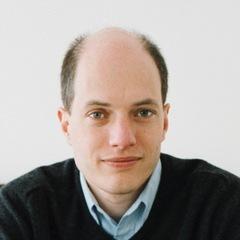
Author

Alain de Botton
Alain de Botton

Alain de Botton is a Swiss writer and philosopher known for his books on philosophy, art, and culture. His work is characterized by its accessible exploration of profound themes, which has won him a wide audience. more

You May Also Like

“Doing nothing is the hardest torture that a person can put himself through. For he is always brought face to face with his own self, which demands that he gives account for the sun which he uselessly squanders, for the springs of energy in his organism, the gold of wisdom in the mines of his brains. The masses work, slog, forget. They drink the alcohol of their sweat. Work is a flight from responsibility and God. Since the mystic beliefs have been banned from Europe, pillars of glory have been erected to rationality in order to put something in place of the cross: the French Revolution named its goddess reason, the Russians named their Moloch work. But the machine called Europe is running idle: it fills stomachs with fake bread, builds artificial houses with iron paper, the products are bad, the pay meager, and at the end of the six holy work days is the unholy Sunday which one sleeps through out of fear of the great boredom which is infecting Europe. Sunday, the day of idleness, is nowadays a punishment for Christianity, the cities collapse into soulless ruins, nature is just a backdrop for dusty sports. Doing nothing out of principle, my dear, is nowadays the most violent form of revolt.”

“Everyone, no matter what kind of job he or she has, fantasizes about freaking out at work. How many corporate drones, stuck in a boring staff meeting, have had the sudden urge to jump on top of the conference table and start screaming obscenities? Strip off their clothes? Kiss the woman or man next to them? We all have. How many employees joke about shooting the boss or blowing the place up? I’m not suggesting we do any of these things, mind you, but let’s not kid ourselves; we all have a little murder in our heart.”

“The ways by which you may get money almost without exception lead downward. To have done anything by which you earned money merely is to have been truly idle or worse. If the laborer gets no more than the wages which his employer pays him, he is cheated, he cheats himself. If you would get money as a writer or lecturer, you must be popular, which is to go down perpendicularly. Those services which the community will most readily pay for it is most disagreeable to render. You are paid for being something less than a man. The State does not commonly reward a genius any more wisely. Even the poet laureate would rather not have to celebrate the accidents of royalty. He must be bribed with a pipe of wine; and perhaps another poet is called away from his muse to gauge that very pipe.”

“A recurrent question about photography is how much self expression it allows the photographer. There are two standard positions, each corresponding to a different location oh photographic skill. The opposition is neatly summed up in Bioy Casares’s novel The Adventures of a Photographer in La Plata (1989). The hero Nicolasito Almanza declares: ‘I am convinced that all of photography depends on the moment we press the release […] I believe that you’re a photographer if you know exactly when to press the release.’ In making this declaration he is responding to the opinion expressed by Mr Gruter, owner of a photographic laboratory: ‘[…] sometimes I wonder if the true work of the photographer doesn’t begin in the dark room, amid the trays and the enlarger.”