Quotessence
Home / Quotes / Quote by Julius Nyerere

Quote by Julius Nyerere

Author

Julius Nyerere
Julius Nyerere

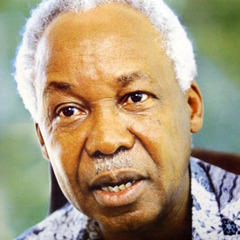
Julius Kambarage Nyerere was a prominent Tanzanian politician, born on April 13, 1922, and passed away on October 14, 1999. He played a crucial role in the struggle for Tanzania's independence and became the first President of the United Republic of Tanzania in 1964. Nyerere advocated for Ujamaa, an economic model based on collectivism and self-sufficiency. He had a profound impact on politics and African affairs. more

You May Also Like

“The moms I knew when I was little didn't have to prove that it was okay to want a child. Sure, a lot of women I know wonder if they do want a child, but not why. It's assumed why. The question cis women get asked is: Why don't you want kids? And then they have to justify that. If I had been born cis, I would never even have had to answer these questions. I wouldn't have had to prove that I deserve my models of womanhood. But I'm not cis. I'm trans. And so until the day that I am a mother, I'm constantly going to have to prove that I deserve to be one. That it's not unnatural or twisted that I want a child's love. Why do I want to be a mother? After all those beautiful women I grew up with, the ones who chaperoned my classes on field trips, or made me lunch when I was at their house, or sewed costumes for all the little girls that I ice skated with — and you too, Katrina, for that matter — have to explain their feelings about motherhood, then, I'll explain mine. And do you know what I'll say? Ditto.”

“Porque não contestam as mulheres a soberania do macho? Nenhum sujeito se coloca imediata e espontaneamente como não essencial; não é o Outro que, definindo-se como Outro, define o Um; ele é posto como Outro pelo Um definindo-se como Um. Mas para que o Outro não se transforme no Um é preciso que se sujeite a esse ponto de vista alheio. De onde vem essa submissão na mulher?”

“When a young sixteen-year old Nazi died crying, “Heil Hitler!” he was not guilty, and it was not he whom we hated but his masters. The desirable thing would be to re-educate this misled youth; it would be necessary to expose the mystification and to put the men who are its victims in the presence of their freedom. But the urgency of the struggle forbids this slow labor. We are obliged to destroy not only the oppressor but also those who serve him, whether they do so out of ignorance or out of constraint.”