Quotessence
Home / Quotes / Quote by Thomas Merton

Quote by Thomas Merton

“Contemplation is also the response to a call: a call from Him who has no voice, and yet who speaks in everything that is, and who, most of all, speaks in the depths of our own being: for we ourselves are words of his. But we are words that are meant to respond to him, to answer to him, to echo him, and even in some way to contain him and signify him. Contemplation is this echo. It is a deep resonance in the inmost center of our spirit in which our very life loses its separate voice and re-sounds with the majesty and the mercy of the Hidden and Living One. He answers himself in us and this answer is divine life, divine creativity, making all things new. We ourselves become his echo and his answer. It is as if in creating us God asked a question, and in awakening us to contemplation he answered the question, so that the contemplative is at the same time, question and answer.”

Quote by Thomas Merton

Work

New Seeds of Contemplation

This book is a compilation of reflective essays that delve into the essence of contemplation, examining its significance in fostering spiritual insight and personal transformation. more

Author
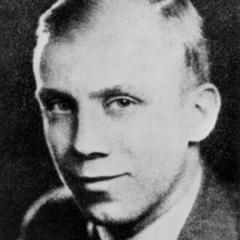
Thomas Merton
Thomas Merton

Thomas Merton (January 31, 1915 - December 10, 1968) was an American writer, poet, social critic, and mystic. His works covered a wide range of topics including philosophy, religion, and social justice, and were highly appreciated by readers. more

You May Also Like

“The life of contemplation implies two levels of awareness: first, awareness of the question, and, second, awareness of the answer. Though these are two distinct and enormously different levels, yet they are in fact an awareness of the same thing. The question is, itself, the answer. And we ourselves are both. But we cannot know this until we have moved into the second kind of awareness. We awaken, not to find an answer absolutely distinct from the question, but to realize that the question is its own answer. And all is summed up in one awareness - not a proposition, but an experience: "I AM".”

“God does not give his joy to us for ourselves alone, and if we could possess him for ourselves alone we would not possess him at all. Any joy that does not overflow from our souls and help other men to rejoice in God does not come to us form God. (But do not think that you have to see how it overflows into the souls of others. In the economy of his grace, you may be sharing his gifts with someone you will never know until you get to heaven.)”

“The temptation to pretend we know God's plan is a strong one. All of us have succumbed to it in one way or another. The point is not whether or not we are rightl we may be. The point to remember is that it is God's job, not ours, to speak inner truth to our friends. In our companionship of those who are suffering we can say we love, "We don't understand why you are experiencing this difficult situation, but we are here for you. God is faithful. We will support you as you try to believe, even when that seems impossible.”

“The environment of spiritual direction, then, is affirming and encouraging, but it is also a place of authenticity. In spiritual direction we look at the truth of our present situation and experience. The question asked is not "What should be happening in my life?" but "What is happening in my life?" We look for God here, now, because the place where we are in our lives is the place where we find God. Our souls, our lives, are the dwelling place of God. We are God's temple (2 Corinthians 6:16). God names himself the "I AM" (Exodus 3:14) - not the I-will-be, the I-was, the I-could-be, but the I-am. The present moment, the present set of circumstances, the present relationships in our lives - this is where God lives. This is where God meets us and gives us life. This is where spiritual direction occurs.”

“It was the recommendation of John of the Cross (in a manner similar to that of Gamaliel) that one should not pay particular attention to any phenomena or experiences. If an experience were truly and directly of God, he felt, its truth would become evident naturally in one's life. If it were of something "else," it would certainly not be worthy of attention. Therefore, no special attention was necessary.”

“At the same time [the contemplative] most earnestly wants everybody else to share his peace and his joy. His contemplation gives him a new outlook on the world of men. He looks about him with a secret and tranquil surmise which he perhaps admits to no one; hoping to find in the faces of other men or to hear in their voices some sign of vocation and potentiality for the same deep happiness and wisdom. He finds himself speaking of God to the men in whom he hopes he has recognized the light of his own peace, the awakening of his own secret: or if he cannot speak to them, he writes for them, and his contemplative life is still imperfect without sharing, without companionship, without communion.”