Quotessence
Home / Quotes / Quote by Frithjof Schuon

Quote by Frithjof Schuon

“Religion has accepted and almost “Christianized” the machine, and it is dying from this, whether through absurdity and hypocrisy, as in the past, or through capitulation and suicide, as today. It is as if there were only two sins, unbelief and unchastity; the machine is neither an unbeliever nor is it unchaste; therefore one may sprinkle it with holy water in good conscience.”

Quote by Frithjof Schuon

Work

The Fullness of God: Frithjof Schuon on Christianity

Browse quotes and source details for this work. more

Author
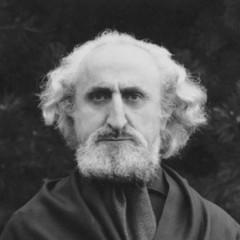
Frithjof Schuon
Frithjof Schuon

Frithjof Schuon was a Swiss author known for his research on mysticism and religious philosophy. His works encompass a wide range of religious and philosophical traditions, including Islam, Hinduism, Buddhism, and Christianity. Schuon's writings emphasize the common foundations among different religions and advocate for a trans-denominational religious perspective. more

You May Also Like

“We're at a crucial point in history. We cannot have fast cars, computers the size of credit cards, and modern conveniences, whilst simultaneously having clean air, abundant rainforests, fresh drinking water and a stable climate. This generation can have one or the other but not both. Humanity must make a choice. Both have an opportunity cost. Gadgetry or nature? Pick the wrong one and the next generations may have neither.”

“From the day when battery-run voices began broadcasting old speeches to battery-run listeners, the beast has been talking to itself. Having swallowed everyone and everything outside itself, the beast becomes its own sole frame of reference. It entertains itself, exploits itself and wars on itself. It has reached the end of its Progress, for there is nothing left for it to progress against except itself.”

“Human communities as variegated in their ways and beliefs as birds are in feathers were invaded, despoiled and at last exterminated beyond imagination’s grasp. The clothes and artifacts of the vanished communities were gathered up as trophies and displayed in museums as additional traces of the march of progress; the extinct beliefs and ways became the curiosities of yet another of the invaders’ many sciences. The expropriated fields, forests and animals were garnered as bonanzas, as preliminary capital, as the precondition for the production process that was to turn the fields into farms, the trees into lumber, the animals into hats, the minerals into munitions, the human survivors into cheap labor. Genocide was, and still is, the precondition, the cornerstone and ground work of the military-industrial complexes, of the processed environments, of the worlds of offices and parking lots.”

“The concerns and methods vary, but there is to it all, at bottom, a message that is unmistakably Luddistic: beware the technological juggernaut, reckon the terrible costs, understand the worlds being lost in the world being gained, reflect on the price of the machine and its systems on your life, pay attention to the natural world and its increasing destruction, resist the seductive catastrophe of industrialism.”

“It is important to note that the acquisition of wealth, as the accepted standard of succes, does not refer to increasing material goods for sustenance purposes, or even for the purpose of increasing enjoyment. It refers rather to wealth as a sign of individual power, a proof of achievement and self-worth. Modern economic individualism, though based on belief in the free individual, has resulted in the phenomenon that increasingly large numbers of people have to work on the property (capital) of a few powerful owners. It is not surprising that such a situation should lead to widespread insecurity, for not only is the individual faced with a criterion of succes over which he has only partial control but also his opportunities for a job are in considerable measure out of his control.”