Quotessence
Home / Quotes / Quote by George Orwell

Quote by George Orwell

Work

The Road to Wigan Pier

Published in 1937, the book is a blend of personal reflections and detailed observations of the author's journey through the industrial town of Wigan, shedding light on the hardships faced by the working poor during the interwar period. more

Author
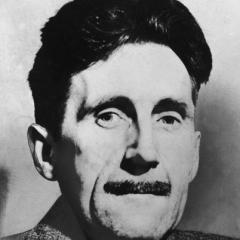
George Orwell
George Orwell

George Orwell, born Eric Arthur Blair, was a British novelist and political critic. Known for his sharp social criticism and profound insights into totalitarianism, Orwell is best remembered for his novels '1984' and 'Animal Farm', which remain influential to this day. more

You May Also Like

“It is important to note that the acquisition of wealth, as the accepted standard of succes, does not refer to increasing material goods for sustenance purposes, or even for the purpose of increasing enjoyment. It refers rather to wealth as a sign of individual power, a proof of achievement and self-worth. Modern economic individualism, though based on belief in the free individual, has resulted in the phenomenon that increasingly large numbers of people have to work on the property (capital) of a few powerful owners. It is not surprising that such a situation should lead to widespread insecurity, for not only is the individual faced with a criterion of succes over which he has only partial control but also his opportunities for a job are in considerable measure out of his control.”

“The industrial towns of the North are ugly because they happen to have been built at a time when modern methods of steel-construction and smoke-abatement were unknown, and when everyone was too busy making money to think about anything else. ...But since the war, industry has tended to shift southward and in doing so has grown almost comely. The typical post-war factory is not a gaunt barrack or an awful chaos of blackness and belching chimneys; it is a glittering white structure of concrete, glass and steel, surrounded by green lawns and beds of tulips. ...As Mr Aldous Huxley has truly remarked, a dark Satanic mill ought to look like a dark Satanic mill and not like the temple of mysterious and splendid gods.”

“Amid the coal-fired fug of industrialism, people began to recognize that the unchecked spread of civilization could be toxic, and the wilderness, by comparison, came to represent cleanliness and health. Quite suddenly, the symbolic polarity of the word wilderness was reversed: it went from being wicked to being holy.”

“Ohio hadn’t gone through the same real estate boom as the Sun Belt, but the vultures had circled the carcasses of dying industrial towns––Dayton, Toledo, Mansfield, Youngstown, Akron––peddling home equity loans and refinancing. All the garbage that blew up in people’s faces the same way subprime mortgages had. A fleet of nouveau riche snake oil salesmen scoured the state, moving from minority hoods where widowed, churchgoing black ladies on fixed incomes made for easy marks to the white working-class enclaves and then the first-ring suburbs. The foreclosures began to crop up and then turn into fields of fast-moving weeds, reducing whole neighborhoods to abandoned husks or drug pens. Ameriquest, Countrywide, CitiFinancial––all those devious motherfuckers watching the state’s job losses, plant closings, its struggles, its heartache, and figuring out a way to make a buck on people’s desperation. Every city or town in the state had big gangrenous swaths that looked like New Canaan, the same cancer-patient-looking strip mall geography with brightly lit outposts hawking variations on usurious consumer credit. Those entrepreneurs saw the state breaking down like Bill’s truck, and they moved in, looking to sell the last working parts for scrap.”

“It was a Sunday evening in London, gloomy, close and stale. Maddening church bells of all degrees of dissonance, sharp and flat, cracked and clear, fast and slow, made the brick and mortar echoes hideous. Melancholy streets in a penitential garb of soot, steeped the souls of the people who were condemned to look at them out of windows, in a dire despondency. In every thoroughfare, up almost every alley, and down almost every turning, some doleful bell was throbbing, jerking, tolling, as if the Plague were in the city and the dead-carts were going round. Everything was bolted and barred that could by possibility furnish relief to an overworked people. No pictures, no unfamiliar animal, no rare plants or flowers, no natural or artificial wonders of the ancient world - all taboo with that enlightened strictness, that the ugly South sea gods in the British Museum might have supposed themselves at home again. Nothing to see but streets, streets, streets. Nothing to breathe but streets, streets, streets. Nothing to change the brooding mind, or raise it up. Nothing for the spent toiler to do, but to compare the monotony of his seventh day with the monotony of his six days, think what a weary life he led, and make the best of it - or the worst, according to the probabilities.”

“The journalist Walter Lippmann identified in Henry Ford, for all his peculiarity, a common strain of "primitive Americanism." The industrialist's conviction that he could make the world conform to his will was founded on a faith that success in economic matters should, by extension, allow capitalists to try their hands "with equal success" at "every other occupation." "Mr. Ford is neither a crank nor a freak," Lippmann insisted, but "merely the logical exponent of American prejudices about wealth and success.”