Quotessence
Home / Quotes / Quote by Hermann Hesse

Quote by Hermann Hesse

“... it would be better for our country and the world in general, if at least the few people who were capable of thought stood for reason and the love of peace instead of heading wildly with blind obsession for new war.”

Quote by Hermann Hesse

Work

Steppenwolf

A complex narrative that delves into themes of identity, alienation, and the human condition more
Author

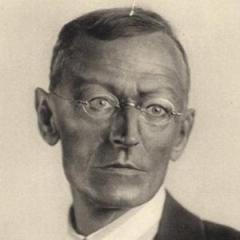
Hermann Hesse
Hermann Hesse

Hermann Hesse was a German poet and novelist, born on July 2, 1877, and died on August 9, 1962. Known for his profound psychological descriptions and exploration of human nature, his works include classics such as 'Steppenwolf' and 'The Glass Bead Game'. more

You May Also Like

“Yes, I'm a materialist. I'm willing to be shown wrong, but that has not happened — yet. And I admit that the reason I'm unable to accept the claims of psychic, occult, and/or supernatural wonders is because I'm locked into a world-view that demands evidence rather than blind faith, a view that insists upon the replication of all experiments — particularly those that appear to show violations of a rational world — and a view which requires open examination of the methods used to carry out those experiments.”

“No, not at all. I’m an atheist. You could say that I’m agnostic, but that’s just a certain kind of atheist (laughs). An atheist is someone who lacks a belief in a supernatural, and that’s me. I can’t say with absolute certainty that there is nothing beyond the material world, but there’s no reason for me to think there is. If I were a gambling man I would put all my money on there not being anything other than this universe.”

“So that, upon the whole, we may conclude, that the Christian Religion not only was at first attended with miracles, but even at this day cannot be believed by any reasonable person without one. Mere reason is insufficient to convince us of its veracity: and whoever is moved by Faith to assent to it, is conscious of a continued miracle in his own person, which subverts all the principles of his understanding, and gives him a determination to believe what is most contrary to custom and experience.”