Quotessence
Home / Quotes / Quote by Steve Albini

Quote by Steve Albini

“No, not at all. I’m an atheist. You could say that I’m agnostic, but that’s just a certain kind of atheist (laughs). An atheist is someone who lacks a belief in a supernatural, and that’s me. I can’t say with absolute certainty that there is nothing beyond the material world, but there’s no reason for me to think there is. If I were a gambling man I would put all my money on there not being anything other than this universe.”

Quote by Steve Albini

Author
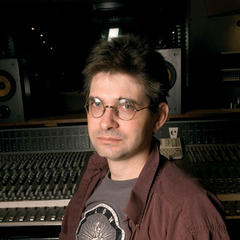
Steve Albini
Steve Albini

Steve Albini, born on July 22, 1962, is a renowned American singer. He is known for his unique musical style and strict approach to music production. Albini has had a significant impact on the music industry, particularly in the realms of independent rock and post-punk. more

You May Also Like

“So that, upon the whole, we may conclude, that the Christian Religion not only was at first attended with miracles, but even at this day cannot be believed by any reasonable person without one. Mere reason is insufficient to convince us of its veracity: and whoever is moved by Faith to assent to it, is conscious of a continued miracle in his own person, which subverts all the principles of his understanding, and gives him a determination to believe what is most contrary to custom and experience.”

“Amy [Winehouse] increasingly became defined by her addiction. Our media though is more interested in tragedy than talent, so the ink began to defect from praising her gift to chronicling her downfall. The destructive personal relationships, the blood soaked ballet slippers, the aborted shows, that YouTube madness with the baby mice. In the public perception this ephemeral tittle-tattle replaced her timeless talent. This and her manner in our occasional meetings brought home to me the severity of her condition. Addiction is a serious disease; it will end with jail, mental institutions, or death.”

“The idea persists that faith is a remnant of an ancient way of life, a way of knowing that asks for unthinking acceptance of a belief system or adherence to specific dogma. This may be the case for some spiritual traditions, but the Buddha insisted that his disciples investigate his teachings with the powers of reason, test them in the inner laboratory of meditation, and build their faith on a firm foundation of knowledge. As a result, faith in the Dharma implies faith in one's ability to recognize truth when it presents itself and to take responsibility for verifying it through analysis and meditative experience.”

“To prove to an indignant questioner on the spur of the moment that the work I do was useful seemed a thankless task and I gave it up. I turned to him with a smile and finished, 'To tell you the truth we don't do it because it is useful but because it's amusing.' The answer was thought of and given in a moment: it came from deep down in my mind, and the results were as admirable from my point of view as unexpected. My audience was clearly on my side. Prolonged and hearty applause greeted my confession. My questioner retired shaking his head over my wickedness and the newspapers next day, with obvious approval, came out with headlines 'Scientist Does It Because It's Amusing!' And if that is not the best reason why a scientist should do his work, I want to know what is. Would it be any good to ask a mother what practical use her baby is? That, as I say, was the first evening I ever spent in the United States and from that moment I felt at home. I realised that all talk about science purely for its practical and wealth-producing results is as idle in this country as in England. Practical results will follow right enough. No real knowledge is sterile. The most useless investigation may prove to have the most startling practical importance: Wireless telegraphy might not yet have come if Clerk Maxwell had been drawn away from his obviously 'useless' equations to do something of more practical importance. Large branches of chemistry would have remained obscure had Willard Gibbs not spent his time at mathematical calculations which only about two men of his generation could understand. With this trust in the ultimate usefulness of all real knowledge a man may proceed to devote himself to a study of first causes without apology, and without hope of immediate return.”

“Allow intelligent design into science textbooks, lecture halls, and laboratories, and the cost to the frontier of scientific discovery—the frontier that drives the economies of the future—would be incalculable. I don't want students who could make the next major breakthrough in renewable energy sources or space travel to have been taught that anything they don't understand, and that nobody yet understands, is divinely constructed and therefore beyond their intellectual capacity. The day that happens, Americans will just sit in awe of what we don't understand, while we watch the rest of the world boldly go where no mortal has gone before.”