“Let me here remind you that the essence of dramatic tragedy is not unhappiness. It resides in the solemnity of the remorseless working of things. This inevitableness of destiny can only be illustrated in terms of human life by incidents which in fact involve unhappiness. For it is by them that the futility of escape can be made evident in the drama. This remorseless inevitableness is what pervades scientific thought. The laws of physics are the decrees of fate.”
Quote by Alfred North Whitehead
Author
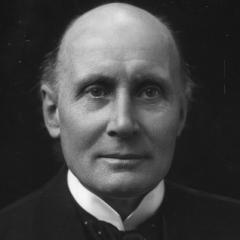
Alfred North Whitehead
Alfred North Whitehead was a British mathematician, philosopher, born on February 15, 1861, and died on December 30, 1947. He is known for his contributions to mathematics, logic, philosophy, and the philosophy of science, particularly for his co-authorship of 'Principia Mathematica' with Bertrand Russell. more
You May Also Like
“Here. There. Everywhere. Somewhere. Home.”
Source: The Geography of You and Me
Source: The Army of the Republic
Source: The worm Ouroboros
Source: THE PILLARS OF THE EARTH
“He did it because he could not help himself, which explains everything and nothing”
Source: The Human Script