“And we're not alone, you know, children," came Mrs. Whatsit, the comforter. "All through the universe, it's being fought, all through the cosmos, and my, but it's a grand and exciting battle. I know it's hard for you to understand about size, how there's very little difference in the size of the tiniest microbe and the greatest galaxy. You think about that, and maybe it won't seem strange to you that some of our very best fighters have come right from your own planet, and it's a little planet, dears, out on the edge of a little galaxy. You can be proud that it's done so well." "Who have our fighters been? Calvin asked. "Oh, you must know them, dear," Mrs. Whatsit said. Mrs. Who's spectacles shone out at them triumphantly. "And the light shineth in darkness; and the darkness comprehended it not." "Jesus!" Charles Wallace said. "Why of course, Jesus!" "Of course!" Mrs. Whatsit said. "Go on, Charles, love. There were others. All your great artists. They've been lights for us to see by.”
Quote by Madeleine L'Engle
Work
In this classic science fiction novel, Meg Murry, a young girl with a strong-willed personality, embarks on a journey to find her missing father, a renowned physicist. Accompanied by her younger brother Charles Wallace and Calvin O'Keefe, a mysterious boy, they encounter various beings and traverse different dimensions. The story delves into complex scientific concepts and metaphysical questions, while also emphasizing the importance of love, bravery, and the power of imagination. more
Author
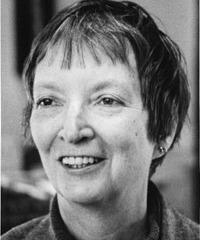
American writer, born on November 29, 1918, and died on September 6, 2007. Madeleine L'Engle is renowned for her science fiction and fantasy novels, with her most famous work being 'A Wrinkle in Time'. more
You May Also Like
“Man created words to free himself”
“Does mankind truly hate itself? How can one surmount such irreverence?”
“When will you ever accept the true ugliness of health?”