Quotessence
Home / Quotes / Quote by Frank Chodorov

Quote by Frank Chodorov

“The economic decline of a society without property rights is followed by the loss of other values. It is only when we have a sufficiency of necessaries that we give thought to nonmaterial things, to what is called culture. On the other hand, we find we can do without books, or even moving pictures, when existence is at stake. Even more than that, we who have no right to own certainly have no right to give and charity becomes an empty word; in a socialistic order no one need give thought to an unfortunate neighbor because it is the duty of the government, the only property owner, to take care of him; it might even become a crime to give a "bum" a dime. When the denial of the right of the individual is negated through the denial of ownership, the sense of personal pride, which distinguishes man from beast, must decay from disuse. The income tax is not only a tax; it is an instrument that has the potentiality of destroying a society of humans.”

Quote by Frank Chodorov

Work

The Income Tax: Root of All Evil

Browse quotes and source details for this work. more

Author
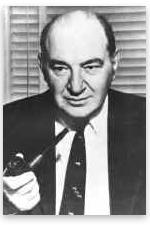
Frank Chodorov
Frank Chodorov

Frank Chodorov was an American writer, political commentator, and libertarian. His work primarily focused on free-market economics and conservative political ideas. more

You May Also Like

“Believe me, Eugenie, the words "vice" and "virtue" supply us only with local meanings. There is no action, however bizarre you may picture it, that is truly criminal; or one that can really be called virtuous. Everything depends on our customs and on the climates we live in. What is considered a crime here is often a virtue a few hundred leagues away; and the virtues of another hemisphere might, quite conversely, be regarded as crimes among us. There is no atrocity that hasn't been deified, no virtue that hasn't been stigmatized.”

“Communism has never concealed the fact that it rejects all absolute concepts of morality. It scoffs at any consideration of "good" and "evil" as indisputable categories. Communism considers morality to be relative, to be a class matter. Depending on circumstances and the political situation, any act, including murder, even the killing of hundreds of thousands, could be good or could be bad. It all depends on class ideology. And who defines this ideology? The whole class cannot get together to pass judgment. A handful of people determine what is good and what is bad. But I must say that in this respect Communism has been most successful. It has infected the whole world with the belief in the relativity of good and evil. Today, many people apart from the Communists are carried away by this idea.”

“The idea so commonly found that scepticism leads to toleration arises from considering the effects of scepticism in the intellectual who takes no active part - not its effects in the man of action. In the man of action, moral relativism and scepticism as to the absolute and universal value of his priunciples are no obstacle to a fanatical belief in their immediate value as his own clan at the actual moment; they do not weaken in the least his will to impose his principles. How should he glimpse a soul of truth in the principles of others, entitling them to respect, when he does not believe in noble origins of this kind even for his own principles?”

“Implicit … in the very idea of ordered liberty, was a rejection of absolute truth, the infallibility of any idea or ideology or theology or “ism,” any tyrannical consistency that might lock future generations into a single, unalterable course, or drive both majorities and minorities into the cruelties of the Inquisition, the pogrom, the gulag, or the jihad. ... A rejection of absolutism, in all its forms, may sometimes slip into moral relativism or even nihilism, an erosion of values that hold society together…”

“If people have no respect for God, no love for their Maker, I would ask the question another way: Why not pillage, rape, persecute and murder? If it feels good, and they can get away with it, why not? If God is dead or does not exist, as these people believe, why are not all things permitted? Why should they restrain themselves? Because it’s just wrong? Because it’s not the way civilized people behave? Because what goes around comes around? Because they’ll end up feeling terrible inside? Within tidy circles of properly socialized and reasonable people, such appeals can seem like they actually have the power to restrain people from doing what they otherwise feel like doing. But in the real world outside the philosophy seminar room, oppressors frankly don’t care that you think it’s just wrong. Who are you, they ask, to foist your random moral intuition on them? Who are you to tell them or the lords of the Third Reich what civilized people should and should not do? If what goes around tends to come around, then there’s no moral problem, only a practical problem of making sure it doesn’t come around to you. They think, Fine, if being brutal makes you feel terrible inside, then don’t do it. But it makes me feel powerful, alive, exhilarated and masterful, so quit whining — unless you want to try to stop me. This description of a dark Nietzschean world of self-will — a vacuum devoid of moral authority or spiritual resources for good — used to sen excessively melodramatic to me. But then I got out more. The world is truly full of brutal oppression because humans have rejected their Maker, the source of all goodness, mercy, compassion, truth, justice, and love.”

“A rejection of absolutism, in all its forms, may sometimes slip into moral relativism or even nihilism, an erosion of values that hold society together, but for most of our history it has encouraged the very process of information gathering, analysis, argument, and persuasion which allows us to make better, if not perfect, choices – not only about the means to our ends, but also the ends themselves.”