“He began to accompany his mother on the meat-trail, and he saw much of the killing of meat and began to play his part in it. And in his own dim way he learned the law of meat. There were two kinds of life - his own kind and the other kind. His own kind included his mother and himself. The other kind included all live things that moved. But the other kind was divided. One portion was what his own kind killed and ate. This portion was composed of the non-killers and the small killers. The other portion killed and ate his own kind, or was killed and eaten by his own kind. And out of this classification arose the law. The aim of life was meat. Life itself was meat. Life lived on life. There were the eaters and the eaten. The law was: EAT OR BE EATEN. He did not formulate the law in clear, set terms and moralise about it. He did not even think the law; he merely lived the law without thinking about it at all.”
Quote by Jack London
Work
White Fang is a novel by Jack London, published in 1906. The story follows the journey of a wild wolf cub, White Fang, as he is tamed and becomes a sled dog in the harsh environment of the Yukon. The novel delves into the evolution of White Fang's character, illustrating the transformation from a wild creature to a domesticated animal, and explores the relationship between humans and the natural world. more
Author
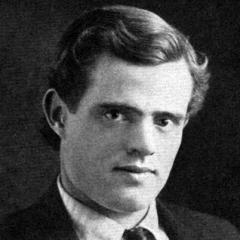
Jack London was an American author known for his adventure novels and realistic works. His writings often depicted the lives of the underclass and his profound insights into the natural world. His notable works include 'The Call of the Wild' and 'White Fang'. more
You May Also Like
“Do not take the advantage of all the little luxuries a house of a stranger may offer you.”
“We rarely recognize the extent to which human happiness requires struggle.”
“Some people faces personal struggles because they made sacrifices for the sake of infatuation.”
“I think most people live in a reality that I left a long time ago.”